
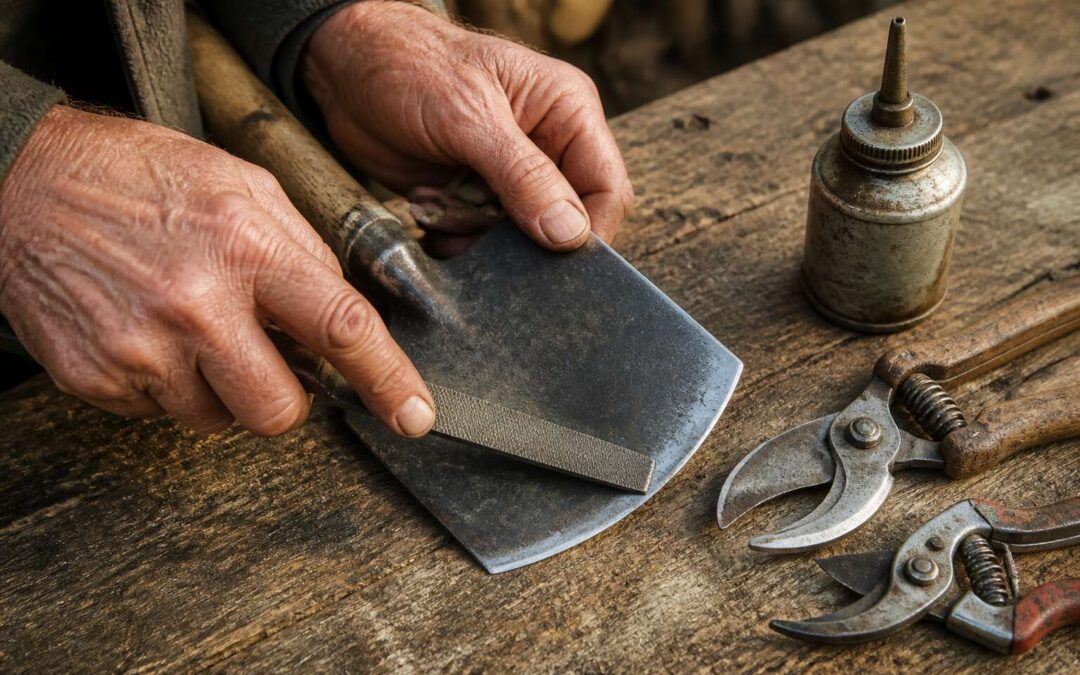
Understanding the Scope of Garden Tool Sharpening Services
Where to Find Professional Sharpening Services
The scope of garden tool sharpening services is far wider than most homeowners assume. A competent sharpener examines the blade’s metal quality, the original bevel, and any nicks or rust before choosing the correct stone or wheel. They will not simply grind away metal; they preserve the tool’s geometry. Many services also treat wooden handles and replace loose rivets, which adds real value over time.
Where can you find such professionals? The answer to can you get garden tools sharpened involves knowing where to look:
- Independent hardware stores with a workshop out back
- Agricultural co-operatives in farming districts
- Mobile sharpening services that schedule weekly stops
- Locksmiths and small engine repair shops that take on side work
In South Africa, the best leads come from other gardeners, so ask around at your local nursery. I have found the most reliable results through small, independent operators who care about their craft!
Types of Tools Typically Accepted for Sharpening
Walk into any sharpening workshop in the Cape and you will see a peculiar assortment leaning against the wall. The question “can you get garden tools sharpened” extends far beyond the usual secateurs and lawnmower blades. A typical week might bring hedge shears crusted with dried sap, a digging fork bent from striking dolomite, or a machete used to clear wattle thickets. Professional sharpeners accept almost anything with an edge:
- Spades, hoes, and trowels that have lost their bite
- Pruners, loppers, and bypass shears
- Axes, billhooks, and cane knives
- Chainsaw chains and brush cutter blades
Each tool presents its own geometry, from the hollow grind of a scissor blade to the robust convex edge of an axe. A sharpener who understands those differences will deliver a working edge rather than a shiny one.
How Sharpening Services Price Their Work
A garden tool that has sat unused through a wet Cape winter often emerges with a crust of rust and a dull, rounded edge. This is where the true scope of a sharpening service becomes apparent. It is not merely about restoring a keen edge; it is about resurrecting the tool’s entire function. A professional will assess the metal’s integrity, remove pitting, and re-establish the correct bevel angle for your specific soil type. Clay-heavy ground demands a different edge than sandy loam, and a knowledgeable sharpener knows this.
Pricing for this work is more art than arithmetic, though it follows a clear logic. The cost is determined by the tool’s condition, the type of steel, and the time required to achieve a proper working edge. A simple hoe with a clean blade will cost far less than a machete that has struck a hidden rock.
– The base fee often covers a single edge, with a surcharge for serrated or heavily damaged blades.
– Power equipment, such as chainsaw chains, requires disassembly and special files, which increases the price.
– Tools that need significant rust removal or reshaping are charged by the hour, as they demand patience.
When you ask, can you get garden tools sharpened for a fair price, the answer depends on the investment you are willing to make in your own efficiency. A sharpened tool cuts cleaner, requires less physical force, and ultimately saves you money by preventing strain on both the implement and your back. The service is a partnership where the sharpener’s skill meets your tool’s potential.
What to Expect When You Drop Off Your Tools
The moment you hand over your spade, the sharpener begins a quiet examination. They turn the blade toward the light, run a thumb along the edge, and inspect the tang. Expect questions about your soil, your watering habits, and how often the tool works. These details shape the edge profile.
A good service also checks for hidden damage. Hairline fractures, bent tips, and uneven wear affect performance beyond the cutting surface. The sharpener may note that the handle needs attention, though they will not force the repair.
- Rust that has eaten deep into the steel may require grinding.
- Tools with wooden handles may need to be separated from the metal first.
- Some services keep your tools for several days.
So when you ask can you get garden tools sharpened, the answer is yes, but the process requires patience and trust in the person who sees your tool’s flaws clearly.
Signs Your Garden Tools Need Professional Attention
Visual Indicators of Dull or Damaged Blades
You notice it when the spade refuses to bite into the soil, or when secateurs crush a stem instead of slicing it. Dull blades demand more force, which strains your wrists and leaves ragged cuts that invite disease into your plants. If you have wondered can you get garden tools sharpened, this is the starting point.
Visual indicators are easy to spot if you look closely. A blade that once gleamed now shows a thin, reflective line along its edge. The metal has folded over. Watch for these warning signs!
- A bright, glinting strip along the cutting edge, indicating rolled steel
- Small crescents or chips missing from the blade face
- Orange or brown pit marks from corrosion
Run your thumb across the edge, perpendicular to the blade. A dull surface feels smooth; a sharp one grips the skin. Cracks near the handle ferrule or wobbling heads demand a professional eye.
Performance Issues That Signal Wear
Performance betrays the blade long before it snaps. A spade that once entered soil with a hiss now lands with a thud, and the shock travels up the handle. The edge is not cutting; it is pushing. Forcing a stubborn tool invites injury and leaves torn stems.
The signs appear in your hands. If your secateurs demand both hands for a single stem, the steel has lost its geometry. Listen: sharp tools whisper, dull ones grumble.
When the blade stops responding to normal effort:
- You lean your weight into the handle
- Cuts require a sawing motion, not a single press
- The tool veers sideways as the edge catches unevenly
These failures ask a plain question: can you get garden tools sharpened? Yes, and the sooner you ask, the more of the blade you preserve. Waiting until the edge chips or the handle cracks turns a simple service into a repair.
When DIY Sharpening Is Not Enough
Hand sharpening fails quietly. When your file suddenly refuses to bite, the steel has work hardened. No amount of pressure changes that. The bevel looks polished, but the edge is round. You are not sharpening, you are smoothing a problem!
Look for these signs that your home kit has reached its limit:
- File skates without removing any metal
- Pressure alone no longer changes the cut
- Every pass flattens the edge further
Can you get garden tools sharpened after such damage? Yes, but a professional needs enough remaining steel to work with. A bench grinder with coolant can restore the edge, while a hand file only makes the geometry worse. An expert can assess the blade before it becomes scrap.
The Sharpening Process Explained by Professionals
Initial Assessment and Thorough Cleaning
The quiet ritual begins with a question: can you get garden tools sharpened to a standard that respects their original craftsmanship? Professionals answer this by first holding the blade to the light, tracing its edge for hidden fractures and uneven wear. This initial assessment is not mere inspection; it is a diagnosis of the tool’s history.
Thorough cleaning follows, stripping away decades of resin and mineral deposits. A solvent bath, a stiff brass brush, and careful drying prepare the steel for the stone. The process demands patience, because every imperfection must be seen before it can be corrected.
- Checking for bent or chipped edges
- Removing embedded grit from the bevel
- Confirming the correct angle for the tool’s purpose
Only then does the sharpening begin, with the professional’s hands guiding the stone in steady arcs. The answer to can you get garden tools sharpened is always yes, but the quality lives in these preparatory moments.
Selecting the Right Grinding Method for Each Tool
Once inspection and cleaning are complete, the real craft begins. Professionals match the grinding method to the steel’s composition and the tool’s intended use. A hardened bypass pruner demands a fine water stone, while a lopper with thick edges tolerates a bench grinder with a cooling wheel.
The question can you get garden tools sharpened often misses this nuance. Method determines outcome. Curved blades require slack grinding on a wheel’s soft surface. Straight edges rely on fixed-angle guides for precision.
- Water stones for Japanese steel and delicate edges
- Bench grinders for heavy mower blades and spades
- Files for serrated tools and pruning saws
In my experience, restraint wins. Each pass removes minimal material to preserve the tool’s geometry, which is why professional results outlast hurried home attempts. Choose the right method and let the stone do its quiet work!
The Crucial Role of Angle and Bevel in a Quality Edge
The angle determines everything. It is the precise geometry that decides whether a blade cuts cleanly or drags through the material. When clients ask can you get garden tools sharpened, they rarely consider this hidden structure. A professional never ignores it! The bevel, the sloped face ground into the steel, must suit the tool’s purpose. A machete requires a coarse, heavy angle. A pruning knife needs something finer and more delicate.
A single degree of error ruins the balance. I have watched edges fail from one miscalculated pass. The edge becomes fragile, or it becomes blunt. The professional reads the existing grind marks and preserves the original factory angle while drawing out a fresh keenness.
- The angle controls cutting efficiency
- The bevel controls edge durability
- Both must be ground in harmony
The result is a blade that holds its temper through hard work.
Finishing Techniques: Honing and Polishing
The final passes matter more than the first. After the grinder sets the edge, honing removes the microscopic burr that grinding leaves behind. A professional runs the blade across a fine stone or strop, feeling for the moment the edge catches. Polishing takes this further, refining the steel until it reflects light evenly.
The finish must match the work:
- A spade slicing through compacted soil needs a tough, slightly coarse edge.
- Secateurs trimming rose canes need a finer, keener finish.
- A hoe scraping weeds needs durability over razor sharpness.
When clients ask can you get garden tools sharpened, they often expect a quick fix. The honing stage is where the real skill shows! A rushed job leaves a fragile edge that fails within days. A careful finish lasts through the season.
Protective Coatings Applied After Sharpening
Once the stone falls silent, the blade’s true enemy emerges: moisture. In South Africa’s coastal regions, salt-laden air finds bare steel within hours. A professional seals the freshly ground edge with a protective coating before the tool leaves the bench.
- Camellia oil, which dries thin and won’t stain wooden handles
- Beeswax paste, for tools stored through the wet winter months
- Boiled linseed oil, which penetrates and protects ferrous metals
This film is not a cosmetic afterthought. Rust is a dull edge made permanent. When clients ask can you get garden tools sharpened, they picture the grinding and honing. The coating matters just as much. It determines whether that edge survives the journey home and the first strike into damp earth.
Comparing Professional Sharpening vs. At-Home Methods
Cost-Benefit Analysis of Hiring a Service
There is a moment, halfway through a pruning session, when the secateurs crush the stem instead of slicing it. You can reach for a bench grinder, or you can ask whether you can get garden tools sharpened by a professional.
Home sharpening requires files, whetstones, and clamps, plus hours spent learning the correct bevel. A professional service charges a modest fee per tool and returns an edge that lasts for months. For the weekend gardener, buying quality equipment costs more than a single service visit!
- A file set for shears costs more than three professional sharpenings.
- Your time has value, and each tool takes fifteen minutes to do poorly.
Professional services eliminate guesswork. They assess each blade and apply the correct angle so tools last longer. When you compare replacement prices against maintenance fees, hiring the work out becomes the practical choice.
Time Savings and Convenience Factors
Some Sunday mornings, the garden calls, but a dull blade answers with a groan. The question, can you get garden tools sharpened, becomes less about capability and more about calendar math. At-home sharpening is not a simple chore. It demands a sacred block of uninterrupted time, a rare commodity for most.
Setting up a workspace with clamps, oil, and the correct file is an entire affair. The learning curve is steep, and the first few attempts yield edges that fail mid-task. A professional service transforms this ordeal into a transaction, a simple errand.
– The DIY process involves studying angles, learning pressure, and practicing on brackets.
– The professional route requires one visit to a drop-off point.
The convenience factor is decisive. For the price of a takeaway coffee, your tools disappear for a few days and return with a flawless, factory-grade edge. Time spent in the garden should be for the plants, not the maintenance. The choice, for many, is a quiet surrender to efficiency, a practical trade of minutes for mastery.
Risks of Incorrect Home Sharpening
A single slip of the file can transform a trusted implement into a permanent source of frustration. The question of can you get garden tools sharpened is often answered with a shrug and a trip to the garage, yet the risks of incorrect home sharpening are rarely considered. A hand that is unsteady removes more than just dull metal; it removes the precise geometry that allows a blade to cut cleanly. Once that angle is lost, no amount of stropping will restore it.
The mistakes are often silent. A grinding wheel spun too fast will draw the temper from the steel, leaving an edge that feels sharp but crumbles at the first meeting with a root. This irreversible damage is the true cost of a casual afternoon project.
– The removal of too much material weakens the blade structure.
– An uneven bevel causes the tool to veer during use.
– Overheating changes the molecular composition of the steel.
– A rounded edge traps debris instead of shedding it.
The process demands a firm understanding of metallurgy and a respect for the tool’s original design. The home workshop lacks the specialised jigs and cooling agents that prevent these failures. What remains is a blade that looks serviceable but performs with a limp, forcing the user to exert more effort for worse results. The answer to can you get garden tools sharpened is yes, but the true question is whether the home attempt preserves the soul of the tool or sacrifices it for a moment of misplaced pride.
Situations Where Professional Sharpening is Clearly Superior
There is a quiet confidence in believing ones own hands are enough. Yet the difference between a service and a garage attempt shows itself in the first clean cut. A professional sharpener understands the metallurgy involved, while the home user often just hopes for an edge. The machinery used in a workshop runs at controlled speeds with constant cooling, preventing the heat damage that silently ruins a blade.
Consider what a trained eye brings to the table:
– Precise restoration of the original bevel angle
– Identification of micro fractures before they spread
– Proper balancing of the blade for even cutting
– Access to industrial grade finishing stones
A professional service also offers a more honest evaluation of whether a tool is worth saving. The question of can you get garden tools sharpened is answered with a level of certainty that the home workshop cannot match. In a country where tough Highveld soil and aggressive growth put unique stress on equipment, the margin for error shrinks. When the tool in question is a heritage piece or a daily workhorse, the professional option is not a luxury. It is a choice to hand over the job and accept that some skills are worth acquiring, while others are worth paying for.
Maximizing the Lifespan of Freshly Sharpened Tools
Proper Storage to Protect a Newly Sharpened Edge
A freshly sharpened edge is a temporary condition. The moment a blade leaves the workshop, atmospheric moisture and abrasive grit begin their quiet assault. South African gardeners face particular challenges here, as coastal humidity and Highveld dust create opposing threats to a delicate bevel.
Proper storage is the single most effective defence. In my experience, gardeners who wipe a blade clean before hanging it away, then apply a thin coat of protective oil, rarely need sharpening more than once a season. Never leave tools leaning against a damp wall or resting on a concrete floor, since both draw moisture into the steel.
– Use individual blade guards for secateurs and loppers
– Mount a wooden rack with dedicated slots for each tool
– Keep edges facing downward and away from any contact surface
The question of can you get garden tools sharpened is easily answered, but the sharper question is whether your storage habits will honour that work. A disciplined routine of cleaning, oiling, and hanging tools properly can double the useful life of an edge.
Cleaning Routines That Prevent Rust and Nicks
Cleaning a blade within minutes of use matters more than any sharpening service can repair later. Sap, wet soil, and crushed leaf matter contain acids that etch steel faster than coastal salt air or Highveld dust. A quick rinse with water, a wipe dry with an old cloth, and you have already prevented most rust before it starts.
For stubborn residue, a plastic scraper outperforms wire brushes, which leave micro-scratches that trap grit and invite nicks.
- Scrub with warm soapy water after heavy digging work
- Dry immediately with a separate cloth, never air-dry
- Inspect the edge during cleaning to catch small chips early
When gardeners ask can you get garden tools sharpened, the follow-up question is whether their daily cleaning habit makes that sharpening last. A blade cleaned properly holds its bevel weeks longer.
Recommended Frequency for Professional Sharpening Visits
Once a professional has restored your spade or secateurs, the edge begins to wear immediately. A freshly sharpened blade facing sandy Gauteng soil will lose its bite faster than one working soft coastal loam. That is the honest tradeoff of gardening here.
Most services recommend a visit every six to twelve months for regular tools. Pruners used weekly on hardwood may need quarterly attention.
- Frequency depends on soil type, tool usage, and steel quality
- A hand trowel may go a full year between visits
- Loppers and shears cutting woody stems often need twice yearly care
The answer to can you get garden tools sharpened is always yes, but the real question is how often you should ask.