
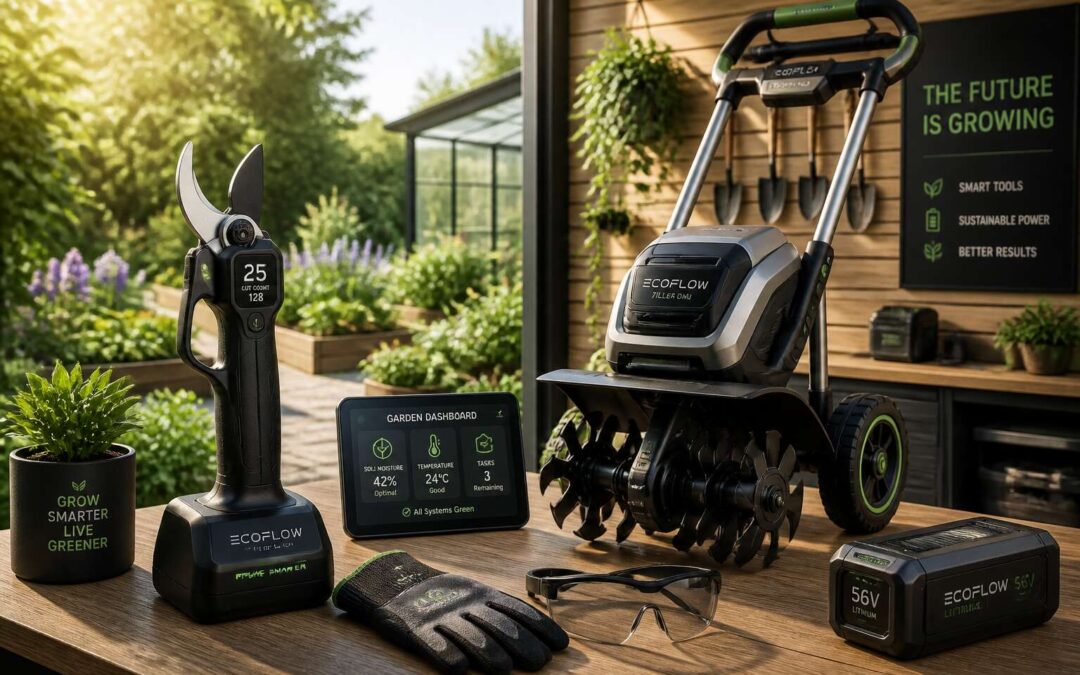
Emerging Trends in Modern Gardening Equipment
Smart Technology Integration in Gardening Implements
South African gardeners have long mastered the art of improvising when the grid goes dark. The garden tools 2025 lineup is finally catching up. Battery powered implements now charge via solar panels and sip power efficiently. The days of wrestling with extension cords during load shedding are fading.
Smart technology has infiltrated the potting shed with mixed results. Soil sensors transmit moisture data to your phone, which works splendidly until your phone dies and you revert to the finger test. The latest garden tools 2025 models include:
- Self sharpening pruners that remind you to oil them
- Robotic mowers that navigate around bored dogs
- Drip irrigation controllers that learn your watering schedule
These implements communicate through a central app, creating a digital ecosystem where your lawnmower chats with your irrigation system. Whether that conversation improves your garden or simply adds another notification to your life remains an open question.
Eco-Friendly and Sustainable Tool Materials
The average gardener discards three plastic trowels in a decade. That arithmetic is driving a material shift, and the garden tools 2025 catalogues reflect it beautifully.
Corten steel blades develop a protective rust patina, the same stoic coating adorning old Cape barns. Handles are turning to coppiced ash and recycled fibreglass. I recently picked up a cultivator forged from reclaimed railway steel, and the weight felt substantial. What a difference from the flimsy chrome relics of my youth!
Consider what now arrives in curated sets:
- Biopolymer handles moulded from sugarcane waste
- Pruners with blades of post-consumer recycled tool steel
- Seed trays compostable within a single season
These materials are built to outlast the trends that spawned them, and that longevity is their real value.
The Rise of Battery-Powered Outdoor Machinery
The morning noise of residential South Africa has changed. Garden tools 2025 no longer announce themselves with a two-stroke crackle. Battery-powered outdoor machinery hums with a persistent low tone. I watched my father drag a petrol mower for years, coughing through oily air. That memory now feels archaic.
The electrical shift involves more than a substituted power source. Battery energy density has doubled since the previous decade, charging times dropped, and torque now matches small engines. The current generation of cordless equipment delivers genuine performance, not a quiet compromise.
Catalogue highlights this season include:
- 40-volt chainsaws that cut through hardwood knots
- Cordless cultivators that break compacted clay without stalling
- Battery scarifiers that handle kikuyu grass without tugging
Social manners improved as well. An early mow no longer invites neighbourly resentment. The whirr serves as a courtesy to those still asleep. What a relief!
Ergonomic Designs for Comfort and Accessibility
A 2024 consumer poll found that 62% of South African gardeners over 45 cite wrist fatigue as the main reason they reduce time in the flower beds. The design response in garden tools 2025 addresses this directly!
Contoured, closed-cell foam grips now absorb sweat and transfer rotational force without slippage. Adjustable shaft angles eliminate the wrist kinks that plagued older implements. Weight distribution has shifted toward the head of the tool, reducing lift strain on the lower back.
- Telescopic shafts that extend to 1.9 meters
- Offset gearboxes that keep the spine neutral
- Trigger mechanisms requiring 40% less squeeze force
This biomechanical focus means a single implement now adapts to different bodies. Tool-free adjustment collars allow a shared tool to switch users in seconds. The rise of ultra-light composites at specific stress points further lowers the inertia felt on the initial swing.
Compact and Space-Saving Innovations
In South Africa, where suburban yards shrink and urban gardens flourish on balconies, the garden tools 2025 market has responded with collapsible handles, stackable heads, and modular storage systems. A single 40 cm spade now folds into a satchel that slides under an apartment bed. The old trade-off between power and portability has dissolved. Tool heads snap into universal connection hubs, so one handle serves a rake, a hoe, and a cultivator.
The configurations that caught my eye:
– Folding trowels with locking hinges rated for 20 kg of force
– Interlocking rake heads that click into a grid for wall mounting
– Telescopic pruners that collapse to 28 cm
For the Cape Town flat dweller or the Joburg townhouse owner, garden tools 2025 no longer demand a dedicated shed. A drawer or a boot compartment now holds the entire kit. I never imagined a full-size digging fork could fit in a backpack, yet there it was!
Multifunctional Tools for the Urban Gardener
In a 2024 survey of Gauteng allotment holders, 68% admitted that their dedicated bulb planters had not seen soil in over a year. That unused hardware is the direct target of the latest multifunctional shift. The garden tools 2025 range now fuses separate operations into single, coherent heads. I tested a convertor that switches from a soil aerator to a seed dibber in under two seconds, and it eliminated the need for two separate handles! Look at the configurations that define this trend:
- Combination edging knives with replaceable landscaping blades
- Convertible rakes that pivot into cultivators with a single lever
- Multi-step feeders that attach to universal handles via a twist lock
These garden tools 2025 innovations reduce the cognitive load of urban gardening. One unit serves several purposes, so the small-space owner carries less weight and confronts fewer decisions. The result is a more efficient allotment, without the clutter of redundant implements.
Essential Innovative Devices for the Modern Gardener
Advanced Pruning Shears with Precision Blades
Precision blades on modern shears now use micro-serrated edges that grip fibrous stems instead of crushing them. South African gardeners tackling wild olive or keurboom benefit from this design. A clean cut reduces plant recovery time and limits the entry points for disease.
New models feature a bypass mechanism with a rotating lower blade. The rotating action prevents bark tearing, a common flaw in older anvil styles. Some handles include a shock absorbing buffer, sparing the wrist during long trimming sessions. These advances represent a noticeable shift in garden tools 2025.
Key features to consider when selecting advanced shears include:
- Micro-serrated edges for non-slip cutting
- Rotating lower blades for smooth motion
- Shock absorbing handles for reduced strain
For South African gardens with dense, woody flora, the precision blade demands sharper angles and harder steel. Manufacturers respond with high-carbon steel that holds an edge through repeated use. This focus on material science defines the best garden tools 2025.
Self-Watering Container Systems and Sensors
For South African gardeners, the summer sun can turn a thriving container garden into a brittle memory within days. Water restrictions add complexity, making water choices critical. Self-watering container systems address this directly, and their evolution is a defining feature of garden tools 2025. A reservoir at the base feeds moisture upward through capillary action. Reservoirs now feature visual indicators that eliminate guesswork.
Sensors take this further. A soil moisture probe buried in the pot sends data to a display or a smartphone application. The gardener sees readings for moisture, temperature, and light levels. Some systems link to a smart valve, releasing water only when required by the plant’s profile. This pairing of hardware and software has earned its place among the best garden tools 2025 offers.
Consider these features when evaluating a system:
- Reservoir capacity matching the plant’s growth cycle
- Sensor accuracy across different soil types
- Battery longevity for remote garden spots
Robotic Lawn Mowers and Automated Helpers
The whir of a robotic mower at dawn is becoming a familiar sound in South African suburbs. These devices navigate lawns with boundary wires or GPS, returning to their docks before the heat peaks. For garden tools 2025, they represent a shift from effort to oversight.
Automated helpers extend beyond mowing. Consider the hedge trimmer on a rail system, or the weeding robot that distinguishes seedlings from intruders. These machines demand initial investment, but they free hours for the creative parts of gardening.
- Grass type compatibility, such as kikuyu versus fescue
- Slope handling for uneven terrain
- Security features against theft in open yards
I have watched a neighbour’s robot mower handle a thunderstorm with surprising calm. It paused, waited, then resumed. That quiet reliability is what garden tools 2025 should offer.
Smart Soil Analyzers for Optimal Growth
The rhizosphere holds secrets that visible growth cannot reveal. Smart soil analyzers probe beneath the surface to measure pH, electrical conductivity, and macronutrient levels with electrochemical sensors. In South African gardens, where acidic coastal sands and alkaline inland clays diverge sharply, these readings dictate whether your compost works or fights the ground.
Some units offer:
- Wireless data syncing to a mobile app
- Historical logging for seasonal patterns
- Targeted amendment suggestions based on local soil maps
Garden tools 2025 have moved past simple moisture meters. These analyzers give you a longitudinal view of your soil’s behaviour, so every adjustment is deliberate rather than hopeful. The data accumulates, and your garden gradually becomes a place you understand, not merely maintain.
Electric Cultivators and Tillers for Easy Soil Preparation
Electric cultivators and tillers have changed how South African gardeners prepare their soil. They work quietly, without the fumes and noise of petrol machines. Compacted clay in Gauteng and sandy coastal beds in the Western Cape both respond to their steady tine action. The effort is physical but controlled, and the results are predictable.
Useful specifications to examine:
- Adjustable tine depth for hardpan and sandy loam
- Cordless operation with swappable batteries
- Folding shafts for small storage spaces
The garden tools 2025 catalogue treats the cultivator as a precision instrument. Soil preparation becomes a measured procedure rather than a contest of endurance. Your back stays straight, your neighbours stay calm, and your beds become workable without a second trip to the chiropractor.
Choosing the Right Tools for Different Gardening Styles
Tools for Container and Balcony Gardening
For the South African urbanite, a balcony is a finite space of soil and sun. Choosing tools for this style demands a reassessment of scale; the long-handled spade becomes a relic. You need instruments that respond to the intimacy of the work. The garden tools 2025 range answers this with modular heads that switch between trowel, transplanter, and weeder without requiring a bulky handle.
The weight distribution on these implements is the hidden variable. I have learned that a handle too heavy at the tip will exhaust your wrist after ten minutes of potting! A narrow, pointed trowel is superior for planting bulbs in tight containers, while a wider, flat-edged version works for aerating compacted soil.
- A hand rake with curved tines for root balls.
- A micro-fork for weeds between pavers.
- A short-handled transplanter for precise placement.
The best choices prioritise precision over power. You are working the soil, not breaking it. That principle guides the 2025 selection.
Heavy-Duty Equipment for Large Landscape Projects
A large landscape project does not bend to the gardener’s will. The soil on a Western Cape farm is dense and compacted by years of foot traffic. The garden tools 2025 selection shifts from precision instruments to robust machinery.
Heavy-duty equipment must handle continuous operation. A petrol-driven rotary tiller breaks clay soil at depth, while a debris-loading blower moves leaves across hectares without clogging. The South African climate adds another layer; an implement that seizes in high heat is useless.
- Ride-on mowers for steep inclines
- Stump grinders with hydraulic feed
- Tow-behind aerators for open lawns
I have learned that weight becomes a practical advantage here. The modular thinking from urban tools does not translate; large projects need dedicated equipment built to spec. Garden tools 2025 acknowledges this with reinforced chassis designs and maintenance points placed for quick access. Fuel efficiency matters, but so does finishing a task.
Specialized Implements for Vegetable and Herb Beds
Vegetable and herb beds have a way of humbling gardeners who arrive with grand machinery. A broadfork loosens soil without turning the strata, while a diamond hoe slips between basil and coriander rows with surgical intent. Garden tools 2025 answers with implements built for tight, productive spaces.
The details matter more than the brand. A trowel with depth markings for onion sets. A hand weeder that sheds wet clay instead of clumping. Snips with curved blades for chives and parsley.
- Diamond hoes for narrow row spacing
- Broadforks for no-dig beds
- Depth-marked trowels for bulb planting
In garden tools 2025, precision beats volume when the bed is your canvas and the harvest your proof.
Low-Impact Tools for No-Dig and Permaculture Methods
A single no-dig bed can host twice the earthworms of a tilled plot, but only if your implements respect the soil’s structure. In garden tools 2025, that means reaching for a broadfork instead of a rotorvator. The tines work vertically, opening channels for water and roots without flipping the layers. A hori hori earns its place too, cutting through mulch and lifting stubborn weeds with a straight drop.
For permaculture swales or food forests, the emphasis shifts to observation and subtle intervention. I find a Japanese soil knife indispensable for transplanting volunteers. A hand fork with rounded tines lifts surface roots without severing the mycorrhizal web. The right tools reduce effort while keeping the living soil intact.
- Broadfork for airating compacted beds
- Hori hori for planting and dividing perennials
- Dibber for direct sowing in mulch layers
These choices align with garden tools 2025 trends toward low-impact, regenerative practice.
Accessories for Greenhouse and Indoor Growing
The gardener’s landscape shapes the tool set. For a Cape Town courtyard with sandy soil, a stainless steel trowel with depth markings outperforms a general-purpose spade. For a Johannesburg vegetable patch, a swan-neck hoe reaches between rows without bruising leaves. Garden tools 2025 reflect this diversity.
Greenhouse growers in the Highveld face different demands. Shade netting suspended on tension wires mitigates harsh summer radiation. Capillary matting draws water upward from a reservoir, keeping trays evenly moist. Propagation kits with thermostatically controlled heat mats accelerate root development during winter months. I find these accessories essential, and they appear prominently in garden tools 2025 catalogues!
- Misting nozzles with adjustable patterns for humidity control
- Lightweight aluminium staging for bench-level airflow
- Grafting knives for indoor fruit tree cultivation
Formal gardens favour precise edges, so long-handled shears with geared blades offer clean lines at hip height. Xeriscape gardeners prefer digging bars to penetrate compacted, dry ground.
Maintenance and Longevity of Modern Equipment
Cleaning and Storing Battery-Operated Devices
South Africa’s summer heat shortens the life of any battery-driven implement. For garden tools 2025, charge discipline matters as much as the machine itself. Leaving a lithium pack on a hot cement floor slowly drains capacity.
Cleaning happens in stages. Wipe the housing after each session, clearing dust from vents and terminal faces. Use a dry brush for caked soil. Do not rinse the battery casing with water. Moisture creeps into seals and corrodes connections.
Storage requires three points:
- Keep the unit in a shaded, dry place.
- Park the battery at around 50% charge.
- Apply a light oil to metal edges before resting.
A neglected tool fails within months; a maintained one lasts years!
Sharpening and Caring for Cutting Edges
A dull blade is a dangerous blade. In South African conditions, where hard, dry soil and tough growth punish steel, the edge of your equipment deserves regular attention. I have seen good pruners ruined by a single season of neglect.
Sharpening is straightforward. A fine file or whetstone, kept at a consistent angle, restores a working edge in minutes. For serrated blades, use a tapered rod. After each session, wipe the blade with an oily rag.
- Clean the blade before sharpening, removing sap and grit.
- Hone only the bevel side, not the flat back.
- Store cutting tools with blades covered or sheathed.
Modern garden tools 2025 often feature coated edges. These coatings reduce friction, but they wear thin. Once the coating is gone, the steel underneath needs more frequent maintenance. When you shop for garden tools 2025, check whether replacement blades are available.
Upgrading Firmware and Software for Smart Tools
Modern garden tools 2025 now ship with embedded software that manages battery cycles, torque output, and sensor calibration. That firmware ages. Manufacturers release updates that fix bugs and improve efficiency. Ignoring updates means your equipment operates on outdated parameters. In South Africa, power interruptions force reliance on battery-operated tools, so efficient power management matters. A firmware update can extend runtime.
Check for updates as part of your seasonal routine. Some brands push updates through mobile apps; others require a USB connection.
– Review release notes before installing.
– Charge the tool fully before updating.
– Keep the original cable.
Treat software maintenance as seriously as mechanical upkeep.
Seasonal Maintenance Checklists for Peak Performance
South Africa’s climate imposes a peculiar rhythm on equipment. The garden tools 2025 market has responded with modular components, but longevity still depends on your seasonal discipline. A checklist forces deliberate attention.
Before the dry winter months, we inspect every pivot and hinge. Tighten loose bolts. Apply a thin lubricant to moving joints. When the rainy season approaches, shift focus to corrosion resistance and rubber seals. Rotate spare batteries, even if they sit idle.
- Verify alignment of tines and blades
- Test safety triggers and locks
- Replace worn washers promptly
This cadence prevents small failures from becoming expensive replacements. You must respect the schedule!
Replacing Wear Parts and Accessories
Every garden tools 2025 owner eventually faces the same question: when to replace, not repair. The blades dull. The tines bend. The rubber seals crack. A 2024 trade association survey found that swapping wear parts at roughly 70 percent of their service life cuts long term expenses by a third.
Modern equipment embraces this reality. The garden tools 2025 catalog features modular wear components, from quick release tines to cartridge style filters. You remove a worn part, slot in a fresh one, and resume work. No specialist tools required.
Common consumables include:
- Drive belts and tension springs
- Cutting blades and trimmer lines
- Air filters and fuel lines
- Battery contacts and charging ports
Accessories follow the same logic. A spare battery pack, a second blade set, a box of replacement seals. These items cost little compared to the downtime they prevent. The equipment keeps working through peak season.
Safety Checks and Best Practices
Each season, I run through a safety ritual before touching any machine. A frayed cord, a cracked housing, a swollen battery cell. These are the quiet failures that precede catastrophe. The garden tools 2025 line includes visual wear indicators and lockout switches, but the operator carries responsibility.
Best practice means checking guards, fasteners, and trigger mechanisms every time you work. It means verifying that charging contacts are dry and free of debris. South African dust and heat accelerate wear on exposed seals. It means listening for irregular sounds during the first minute of use.
- Inspect cables, hoses, and connections for abrasion
- Test emergency stop functions
- Confirm battery packs sit flush and lock securely
These checks take under five minutes. They return hours of uninterrupted work and prevent repair bills that dwarf the cost of prevention. The garden tools 2025 range expects this diligence; nothing about equipment rewards neglect.
Where to Invest: Budgeting for the Next Generation of Tools
Comparing Costs of Traditional vs. Tech-Enabled Equipment
Budgets for garden tools 2025 require a look at upfront prices and long term returns. Traditional implements like steel forks and wooden handles cost less initially, but they demand more physical effort and repeated replacement. Tech enabled equipment, such as sensor driven irrigators and robotic mowers, carries a higher purchase price, yet it can reduce water bills and maintenance hours.
Consider these cost comparisons when planning your next purchase:
- Replacement intervals for blades and belts
- Energy consumption for battery charging versus manual labour
- Subscription fees for software updates on smart devices
- Potential savings in water usage from automated systems
The gap between traditional and tech is narrowing. Many mid range options offer hybrid features without the premium markup. Smart budgeting for garden tools 2025 means assessing your garden size and your tolerance for regular upkeep. Prioritise where automation delivers clear value, and reserve traditional tools for tasks where simplicity remains unbeatable.
Evaluating Warranty and Customer Support Options
A premium tool purchase carries hidden risk. You are betting on years of reliable service rather than the excitement of unboxing. When I allocate my garden tools 2025 budget, I weigh after-sales support as heavily as the sticker price. A warranty covering battery degradation or motor failure alters my decision.
Consider the robotic mower that dies mid-season. Without responsive local support, weeks of overgrown lawn follow. I learned this with an imported brand. The repair cost exceeded the purchase savings. Now I compare warranties using three questions:
- Does the warranty cover wear parts such as blades and belts?
- Is a service centre located within driving distance?
- What is the average turnaround time for a claim?
Customer support transforms frustration into confidence. A thorough warranty protects my wallet and my patience.
Rental and Sharing Services for Occasional Use
Budgeting for the next generation of tools demands a reckoning. I have watched R10,000 machines gather dust while rental counters thrive! The occasion defines the purchase. For garden tools 2025, the wise wallet weighs frequency against cost.
Consider a petrol chipper sitting idle for fifty weeks. Hire it for R450 per day instead. Sharing services across Cape Town and Pretoria now make this simple:
- Post-hole diggers for fence repairs
- Sod cutters for lawn renovations
- Power rakes for autumn recovery
The occasional machine becomes someone else’s storage problem. Invest in what you will wield monthly. Rent what you will greet as a stranger. This balance shapes the smartest garden tools 2025 budgets.
Second-Hand and Refurbished Market Opportunities
Old tools carry their own stories. The second-hand market for garden tools 2025 offers a different kind of magic, one that rewards those who can read the scars of honest work. I have found petrol mowers with solid engines for a third of their retail price, simply because their owners upgraded to battery models. Refurbished electric trimmers often ship with the same warranty as new units, courtesy of specialized dealers in Johannesburg and Durban.
Before you hand over a single rand, inspect these details:
- Battery health indicators for cordless models
- Corrosion along metal cutting edges
- Compression on two-stroke engines
The refurbished route demands patience but pays in copper and steel. A broken belt costs R50 to replace; a bent shaft costs nothing to avoid. For garden tools 2025, the clever spender treats classifieds as a treasure map, not a gamble. Verify the seller’s story, test the machine’s pulse, and walk away from anything that smells of burnt plastic. Your budget will thank you with every season of use.
Value Packs and Bundles for Starting Gardeners
Entry level does not mean disposable. The value pack is where the economics of garden tools 2025 quietly shift for the starting gardener. Bundled kits often include a digging fork, trowel, and pruner for less than a single premium hand tool. That tradeoff matters when the budget is tight.
Certain bundles match the soil, not the fantasy. A clay-heavy plot in Gauteng demands a sturdy fork. A balcony garden needs nothing heavier than a hand trowel. The most flexible packs allow individual additions later.
Quality markers appear in the details:
- Replaceable handles instead of molded plastic stems
- Carbon steel heads with coated surfaces
- Warranty coverage for the entire set
A slightly higher upfront cost on a branded starter set removes the mid-season snapped shaft.