
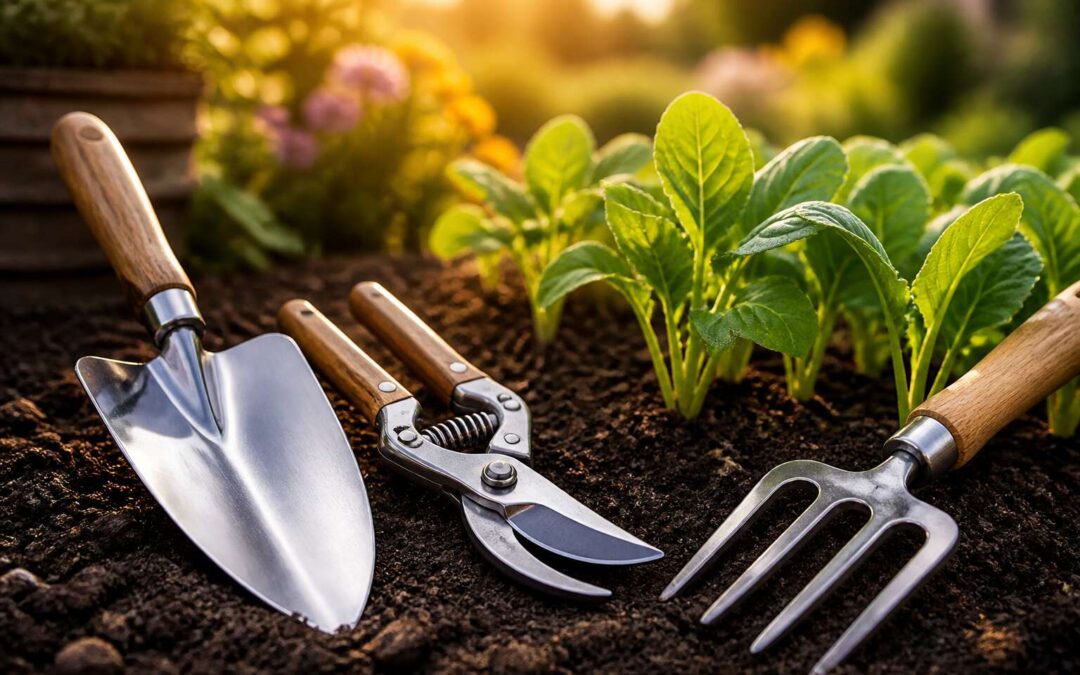
Evaluating Premium Tool Materials and Construction
Stainless Steel vs. Carbon Steel: Which Lasts Longer?
A spade that snaps in clay soil teaches you more than any brochure. In my years tending South African gardens, I have learned that garden tools high quality hinge on steel selection. Stainless steel resists rust, but carbon steel holds a sharper edge for far longer. That difference matters when you are digging into hard, sunbaked ground.
- Stainless steel thrives in humid coastal regions
- Carbon steel suits dry inland farms
Carbon steel demands oiling after every use, yet that small ritual rewards you with a blade that slices through roots effortlessly. Stainless steel needs less attention, though its edge dulls faster. Garden tools high quality, therefore, depend on matching the metal to your local rainfall and soil type. Choose wisely, and your tools will outlast the seasons.
Forged vs. Stamped Steel: Impact on Durability
A garden fork that meets a tangled wattle root reveals the truth of its making. Forged steel tools start as a solid bar, heated and hammered into shape. This process aligns the metal’s grain, letting the head withstand leverage that would shear a stamped blade. Stamped steel, cut from a flat sheet, works well for light digging in loose compost. In rocky Free State fields, I have seen a stamped hoe twist at the tang.
The weight tells you what you are holding. A forged implement carries a heavy, balanced feel. Stamped tools are lighter, but lightness costs resilience. Garden tools high quality often comes down to this single choice. Examine the join where head meets handle. Forged steel shows a smooth transition. Stamped steel reveals a seam.
High-Grade Aluminum and Titanium Handles: Pros and Cons
Consider the handle before you judge the head. A titanium shaft flexes under load and returns to true, a property called springback that spares your wrists in dolomite soils. High-grade aluminum offers a different trade: half the weight of steel, but prone to dents where titanium holds firm.
- Titanium handles resist corrosion from humid coastal air in KwaZulu-Natal.
- Aluminum shafts transmit more vibration to your palms during prolonged chipping.
I have seen both fail in different ways. Garden tools high quality depend on this material choice. The premium paid for titanium buys decades of service; aluminum buys portability at the cost of resilience.
Hardwood vs. Composite Grips: Comfort and Resilience
A grip is the covenant between hand and tool, the final arbitrator of comfort during a long afternoon’s labour. While the shaft transfers force, the handle translates intent, and a poor interface here will undermine even the most resilient head. The choice often narrows to two philosophies: the organic warmth of hardwood, and the engineered consistency of modern composites.
Hardwood grips, often ash or hickory, offer a tactile connection that changes with the weather. They absorb perspiration and provide a sure grip that actually improves as your palms become moist with effort. The wood’s cellular structure dampens the high-frequency chatter from striking roots or stone, a vibration that thin composite sleeves transmit directly to the metacarpals. This natural material is, however, vulnerable. Exposure to alternating wet and dry cycles in the Highveld causes micro-cracks, and the wood will eventually splinter if neglected without oiling.
Composite grips, by contrast, are designed for indifference. They shrug off chemical fertilizers, standing water, and the relentless UV of a Karoo summer. Their surface texture is uniform, offering a secure hold whether you are wearing leather gloves or working bare-handed in the morning cool. The rigidity of the material, while not as forgiving as wood, provides a consistent feel that many landscapers prefer for precise, repetitive motions like edging or hedge trimming.
The real distinction lies in maintenance culture. A user who cleans and oils their tools after each session will find a hardwood grip lasts for generations. A user who leaves tools in a shed or a bakkie’s load bay will find composites far more forgiving. For those seeking garden tools high quality, the decision hinges on your environment. Coastal gardeners battling sea mist should lean toward composite. Those working in the dry interior, who value a tool that feels “alive” in the hand, will find hardwood worth the upkeep.
When evaluating premium tool construction, consider the interface points:
– Check if the grip is glued, pinned, or mechanically fastened to the shaft. A pinned joint is more repairable but can loosen over time.
– Assess the contour. A teardrop shape in hardwood prevents rotation in the hand, while a textured composite grip may offer a more secure hold for larger glove sizes.
– Examine the end cap. A metal or rubber ferrule protects the wood from splitting on impact, a common failure point for cheaper hardwood tools.
The material of the grip will define your tactile experience more than any other component. Wood offers a dynamic, responsive feel that pleases veterans, but it demands a ritual of care. Composite offers a sterile, dependable constancy with near-zero maintenance. Both are valid in the pursuit of garden tools high quality, provided your choice aligns with your climate and your commitment to post-use care. The wrong grip is a minor annoyance at first, and a major source of blisters and fatigue by the season’s end.
Corrosion-Resistant Coatings and Treatments to Look For
A single night of coastal mist can undo years of metallurgical engineering. The Highveld’s afternoon thunderstorms, followed by brilliant sunshine, create a relentless cycle of expansion and contraction that attacks unprotected metal. Corrosion is the silent killer of garden tools high quality, and the treatment applied at the factory often matters more than the steel beneath it.
The most effective protection is not a simple paint layer. It is a conversion coating, often zinc phosphate, that bonds chemically with the metal surface. This base layer resists the creeping rust that starts at a scratched edge and spreads like a disease. High-end manufacturers then apply a powder coat, not a wet spray. Powder coating is baked on, creating a denser, more uniform barrier that withstands the constant scraping of wet soil.
Cheaper tools often use a shiny lacquer. It looks good on the shelf. It fails within months of real use. The lacquer chips at the first impact with a rock, and moisture finds the bare steel instantly.
Look for these protective details when assessing premium construction:
– A matte or textured finish, which hides the inevitable scuffs of daily work better than a high-gloss surface
– A coating that extends slightly up the shaft, protecting the crucial joint between blade and handle
– A manufacturer that lists the specific coating process, rather than a vague claim of being “rust-resistant”
– A visible treatment on the inside of sockets and crevices, where rust always starts first
The best coated tools can be wiped down and stored slightly damp without immediate consequence. The worst will show orange blooms within a fortnight. This gap in durability is where garden tools high quality separates itself from the disposable imports. A premium coating costs little for the manufacturer, but it changes the tool’s lifespan from one season to a decade. Pay attention to the finish, not just the edge.
Identifying Ergonomic Designs for Professional and Home Use
Balanced Weight Distribution: Reducing Fatigue During Long Sessions
Consider the quiet heft of a tool before the work begins. That initial impression, the way weight settles into your palm, often dictates the entire arc of a gardening session. Balance is the silent arbiter of endurance, the difference between a morning of pleasant cultivation and a lingering ache that steals the joy from the task. A poorly distributed tool, one that is head-heavy or grip-heavy, forces your muscles into constant, unconscious compensation. This is not mere comfort; it is biomechanics. For anyone seeking garden tools high quality, the fulcrum point of the implement is a critical specification, often overlooked in favour of blade steel or handle wood.
The physical dialogue between gardener and tool is a conversation of counterweights. When a hoe or fork is correctly balanced, the tool feels like an extension of the arm, requiring minimal grip pressure to control. This reduces the transmission of shock and vibration to the hands and wrists, the primary conduits for fatigue. You can perceive this equilibrium in a simple test: balance the tool horizontally on your finger at the point where the handle meets the head. If it rests there without tipping violently to either side, the engineer has done their work. For the home gardener in the Western Cape, toiling in stubborn clay, or the professional landscaper in Gauteng tending to expansive lawns, this trait is non-negotiable.
Here are specific weight distribution features to look for in premium implements:
– A solid metal ferrule connecting the head to the handle, which adds counterbalance at the junction.
– Handles that are slightly heavier at the base, often using a denser wood or a rubberised butt cap, to offset the tool head.
– Hollow or vented heads on shovels and spades, which reduce the overall weight at the extremity without sacrificing strength.
This meticulous attention to heft is the signature of craftsmanship. A manufacturer who obsesses over the distribution of mass is usually equally meticulous about the tempering of the steel and the seal of the coating. The fatigue you feel after a long day is rarely from the absolute weight of the tool, but from the inefficient leverage it forces upon your body. The right balance keeps your movements fluid and precise, allowing the edge of the blade to do the work, rather than the sinews of your back. It is a subtle quality, but one that separates the merely functional from the truly superior in the realm of garden tools high quality. When you find that equilibrium, you will not need to be told, you will simply know it in the ease of your own motion.
Angled Shafts and Curved Handles: Maximizing Leverage
Consider the angle of the shaft before you grasp it. I have seen South African gardeners, working in scorched earth and sodden clay, learn the curve of a handle the hard way. An angled shaft shifts the force line through the forearm, not the wrist. A curved handle lets the palm rest neutral, keeping the grip relaxed.
I look for specific markers:
- A shaft that bends 15 to 25 degrees near the head.
- A handle that sweeps inward at the base.
- A grip shaped for the webbing of the hand, not just the fingers.
These features are not decorative. They are the quiet reasoning of a maker who understands leverage as a form of mercy. When shaft and handle work in concert, the tool transmits your effort directly to the soil. That efficiency marks garden tools high quality, felt in the long, quiet afternoon.
Soft-Touch, Shock-Absorbing Grips vs. Bare Metal
The average gardener’s hand absorbs hundreds of impacts per minute when digging tough Free State soil. Bare metal handles transmit every shock straight into the palm, which is why Sunday gardeners end up with aching forearms by Monday.
Soft-touch grips absorb vibration and spread pressure across the hand. For professional landscapers working eight hours, this matters as much as blade sharpness. For home users, it means finishing the garden instead of abandoning it halfway. Anyone seeking garden tools high quality should examine the grip before the blade.
Genuine ergonomic design shows in specific markers:
- Shock-absorbing polymer sleeves extending past the main grip
- A barrel shape that fills the hollow of the palm
- Ribbed zones preventing slippage when hands are sweaty
Bare metal is durable and easy to clean. But it demands a death grip, and a death grip tires the hand. garden tools high quality models now pair shock-absorbing cores with textured rubber overlays, offering professional control without the punishment.
Adjustable Handle Lengths for Different Body Heights
Handle length determines whether your body works with the tool or against it. A spade sized for a taller person forces a shorter user to stoop, while a compact handle makes a taller person bend sideways. Proper adjustment aligns the spine naturally.
Garden tools high quality often include telescopic or multi-position handles. Look for locking collars that hold settings without slipping. The ideal length allows your elbow to bend slightly when the blade touches the ground.
- Place both hands on the grip and test the stance
- Adjust so your lower back remains straight
- Check that the tool head stays flat on the soil
Adjustability matters for shared gardens where multiple people work the same beds. A quick change saves time and prevents cumulative joint damage.
Lightweight Designs vs. Heavy-Duty Stability: Finding the Sweet Spot
The gardening market is flooded with featherweight tools that promise effortless work, yet many of them buckle under the first encounter with hard South African clay. Conversely, the sturdiest equipment can feel like punishment after an hour of weeding. The sweet spot lies in evaluating the material distribution and the tool’s intended function, not just its total weight.
A lightweight design is only valuable if the shaft and head are composed of materials with sufficient density to transfer your force into the ground. Professionals often prefer a mid-weight tool with a slightly heavier head because it provides momentum for digging without demanding excessive user effort. Home users might prioritise a lighter model, but they must accept that breaking through compacted soil will require more physical exertion.
When you pick up a potential purchase, consider these points:
– Swing the tool as if working to feel where the balance point sits.
– Check the gauge of the metal; a thin blade will flex and eventually snap.
– Verify the handle-to-head connection; this joint is the most common failure point.
The pursuit of garden tools high quality is ultimately about finding the equilibrium between strain and control. A tool that is too heavy will exhaust you before the job is done, while one that is too light will rob you of the leverage needed for deep root work. The correct choice for your body and soil type will make the task feel less like a chore and more like a purpose.
Universal Grip Sizes for Gloved and Bare Hands
Ergonomics in garden tools high quality often hinges on the grip’s circumference. A handle that suits bare hands becomes too narrow when gloves add bulk, forcing fingers to curl awkwardly. Most universal grips measure around 3.2 centimetres, fitting the average South African hand while leaving room for thin work gloves.
Some manufacturers taper the handle toward the head, which gives bare-handed users a secure purchase without compromising gloved comfort. Professionals notice this on long days, while home gardeners feel it during weekend upkeep. Oval profiles resist twisting better than round shafts, and a flare at the base prevents the tool from sliding out mid-swing. That detail alone prevents scraped knuckles!
I have tested grips on sweltering Highveld afternoons where bare skin meets metal, and on damp Cape mornings where gloves are essential. The finest ergonomic handles belong to garden tools high quality, and they feel unremarkable. That is their achievement.
Maintenance and Care for Extended Tool Lifespan
The Right Cleaning Process: Removing Sap, Dirt, and Rust
Rust claims more tools than hard work ever will. In South Africa’s humid coastal regions, sap and mineral deposits corrode steel within months. Cleaning is not cosmetic; it is structural preservation. Start with a stiff brush to dislodge caked soil, then dissolve tree resin with citrus solvent. For rust, use a wire pad and light oil, never a power grinder that removes base metal.
- Remove sap with warm soapy water and a nylon scraper.
- Neutralize dirt using white vinegar, then rinse thoroughly.
- Treat rust spots with phosphoric acid gel before oiling.
After every session, wipe blades dry and apply a thin coat of linseed oil. This routine keeps garden tools high quality without replacing components. A clean edge cuts cleaner, reduces strain, and prevents the spread of plant diseases. Regular maintenance costs ten minutes but extends lifespan by years.
Sharpening Techniques for Blades and Cutting Edges
A blunt blade tears more than it cuts. Rust is not the only threat; misuse of a dull edge wears down steel faster than any soil. For garden tools high quality, sharpening is essential. A mill file redefines straight edges on hoes and spades. A whetstone restores curved pruners. The angle matters more than pressure, usually 20 degrees.
Fix the tool in a vise, then follow this sequence:
- Stroke the file away from your body.
- Match the existing bevel.
- Finish with a leather strop to remove burrs.
Test on a thin leaf. If it splits cleanly, the edge is ready. Repeat every few weeks. A sharp blade closes wounds quickly, reducing plant stress. This care extends the lifespan of your equipment.
Oiling and Lubricating Moving Parts to Prevent Wear
Friction wears down a garden tool faster than any season of hard use. A single drop of oil at the right pivot prevents the grinding that shortens a tool’s life. For garden tools high quality, lubrication matters as much as a sharp edge. The metal parts work together thousands of times, and each cycle needs protection.
After cleaning, open the tool to expose the joint. Apply one drop of lightweight machine oil to the pivot. Work the mechanism through its full range of motion. Wipe away excess with a clean cloth. A thin film is enough. Too much oil collects grit and forms an abrasive paste.
Common areas to treat:
- the bolt on bypass pruners
- the hinge on loppers
- the spring mechanism on hedge shears
The difference appears in the next cut. A lubricated tool moves with fluid action. A dry one creaks and catches. This attention to moving parts keeps every garden tools high quality purchase performing at its best.
Proper Storage Solutions: Wall Racks, Buckets, and Tool Sheaths
A tool left on the damp lawn overnight will rust by morning. Rust forms fast in coastal air, and it forms faster on a blade still wet from the afternoon’s work. The gardener who invests in garden tools high quality must also decide where those tools rest between sessions.
- Wall racks keep tools upright and visible, so you notice a loose handle before it snaps.
- Buckets filled with sand and a splash of oil offer a quick home for trowels and hand forks.
- Tool sheaths protect blades from both weather and careless fingers.
The best storage method is the one you actually use. If the shed door is a hassle, the tools will stay outside. Keep the rack near the tap where you clean up. That way, the tool goes back before the memory of the job fades, and your garden tools high quality purchase stays protected.
Seasonal Maintenance Checklist to Preserve High-End Gear
Seasonal shifts in South Africa range from wet Cape winters to dry Highveld summers, and each demands different attention. A garden tools high quality collection endures when maintenance follows the calendar rather than convenience. I have seen tools fail not from heavy work but from neglect between sessions.
Autumn calls for inspecting handles before winter dampness settles in. Spring requires checking pivots and hinges after months of storage. The work is not dramatic. It is simply consistent.
- Before the wet season, treat wooden handles with boiled linseed oil.
- Before the dry season, wipe metal surfaces with a rust inhibitor.
- At each season change, tighten hardware and replace worn fasteners.
This rhythm prevents small issues from becoming replacements. The gardener who matches care to climate gets more seasons from each purchase, and garden tools high quality remain exactly that for years.
When to Repair vs. Replace Your Garden Equipment
Maintenance extends a tool’s life, but it cannot bring a broken one back. I look at the joining points first. Where the head meets the handle, where the handle meets your grip, those are the stress zones.
Rust on a blade surface is cosmetic. Rust that has pitted the metal to half its thickness is structural. A bent shaft may straighten with force, but the metal’s internal grain has already weakened.
- Replace when the tool wobbles at the joint after tightening.
- Replace when the blade no longer cuts properly after sharpening.
- Replace when the handle has deep cracks along the grain.
Garden tools high quality justify repair when the fix is honest and the cost is small. A new handle, a fresh coat of oil, a professional sharpening. Those are repairs. Retiring a worn tool is also maintenance. It keeps your collection safe and your work clean.
How to Verify Quality Before You Purchase
Reading Material Specifications and Gauge Thickness
A single season with a flimsy fork or a bending spade costs more than the price difference ever saved. The true measure of a tool lies in its specifications, not its polish. Reading the fine print on packaging or online listings separates wise purchases from regret.
To verify quality, you must understand gauge thickness. This number, often stamped on the blade or handle, indicates steel thickness. A lower number means thicker, more resilient metal. A ten gauge blade will withstand rocky South African soil far better than a fourteen gauge, which will bend under pressure. Do not rely on glossy marketing phrases. Demand real numbers.
When you find a tool that interests you, consider the complete assembly. Look beyond the blade to the collar where the handle meets the head, the welds, and the rivets. A garden tool of high quality shows care in every joint. Forks and spades should have a solid strap or socket joining the head to the shaft, with no visible thin cast metal. Check for burrs or uneven edges. These indicate rushed manufacturing.
The specifications also reveal the material composition. Look for the exact steel grade, such as boron steel or high carbon steel, and the hardness rating if provided. For handles, note the wood type and whether it is kiln dried. For composite materials, check for UV stabilizers.
When the description feels vague, trust your instincts. A reliable product page or label will give you concrete information. Consider these key indicators of a sturdy purchase:
– Blade and socket thickness in millimeters or gauge numbers
– Steel grade with a specific name, not just “hardened steel”
– Handle length in centimeters and the wood species
– Weight of the entire tool in kilograms
– Warranty length, which signals manufacturer confidence
Those details matter because they define how the tool behaves. A heavier gauge steel transfers force cleanly, slicing through roots without twisting your wrists. A thin gauge flexes, absorbing your energy and tiring your arms. You cannot see this difference in a photograph, but you will feel it within minutes of work. The right weight and balance, confirmed by numbers before purchase, prevent fatigue and frustration.
South African conditions often mean hard, compacted earth and rocks. Your tools face brutal punishment. Thick steel functions as your insurance against breakage. It handles the dry crust of summer beds and the claggy clay of the winter rains. Look for the gauge number and find peace of mind.
Recognizing Reputable Brands with Lifetime Warranties
A lifetime warranty is the strongest signal a manufacturer can send. When a company offers this on garden tools high quality, they accept that their product must survive decades of use. It is a binding commitment that separates reputable brands from fleeting importers!
Before you purchase, investigate the maker’s history. A warranty only means something if the company still exists to honor it. Established brands document their manufacturing processes and stand behind their materials. Search for customer complaints about warranty claims and see how they responded.
- Confirm the warranty covers the blade, socket, and handle
- Check whether the warranty transfers to a second owner
- Look for a physical service address rather than a postbox
Then examine the warranty’s language. Vague exclusions, such as “misuse” without definition, give the company a loophole. A straightforward guarantee of repair or replacement for the tool’s lifetime reveals confidence. Trust that clarity.
Hand-Feeling Tools In-Store: The Weight and Balance Test
Two seconds in your palm tells you more than any spec sheet. I always insist on hand-feeling tools in-store. A rugged-looking tool can fail the moment you lift it. The weight and balance test reveals garden tools high quality instantly.
Hold the tool by its main handle and let it rest. Your wrist should stay relaxed. Then perform these checks:
- Balance the tool on one finger where the head meets the handle. It should sit level or tilt softly toward the head.
- Simulate a digging motion for ten seconds. The tool should feel controlled, not heavy.
- Grip the handle with both hands and twist. Good balance resists sudden torque.
A poorly weighted tool forces your forearms to strain. The best examples feel lighter than their actual mass. Trust that physical response.
Customer Reviews and Professional Recommendations: What to Trust
Customer reviews can mislead. A five star rating often comes from someone who used a tool twice. Professional recommendations carry more weight, but even experts disagree. The trick is to find consensus across both groups.
For garden tools high quality, look for patterns. If multiple independent reviews mention the same flaw, believe it. If professionals from different regions praise the same feature, trust that. The most useful sources are often trade journals and university extension services. They test without commercial bias. Home gardeners rate emotional satisfaction. Professionals rate performance under stress.
Which reviews should you weigh?
- Long term ownership reviews over first impression reviews.
- Professionals who use tools daily over weekend hobbyists.
- Negative comments about specific failures over general praise.
A single glowing review proves nothing. A chorus of agreement across disparate voices points toward garden tools high quality.