
Assessing Your Landscape and Requirements
Evaluating yard size and terrain complexity
Nearly half of South African gardeners work plots smaller than 500 square metres, yet the ground beneath them refuses uniformity. A Durban garden may be soft and sandy, while a Pretoria property can conceal iron-hard clay and scattered rock. These conditions shape the garden tools power you will need, but they also dictate the physical effort required.
- Slope gradient, which turns simple mowing into a balancing act
- Root systems from established trees that snag blades
- Narrow passages between beds that limit machine widths
Terrain complexity carries real consequences. A compact garden with tricky angles demands different garden tools power than a sweeping lawn, and mismatched selection leads to stalling engines, torn grass, or damage to paving. Every hidden stone and narrow corner reshapes what a machine must endure.
Identifying common gardening tasks (mowing, trimming, digging)
The true measure of a garden is not its beauty but the labour it demands. Before any purchase, a gardener must confront the raw list of chores that define their weekly routine. Mowing demands a machine that can sustain momentum over open stretches. Trimming requires precision in the margins where grass meets wall or flowerbed. Digging asks for torque that can break through compacted earth.
Consider what your hands actually do on a Saturday morning. Each action carries its own mechanical burden, and these tasks reveal the garden tools power required. A casual observer sees a lawn, but the gardener sees a sequence of distinct labours:
– Repeated passes across the same ground
– Edge work that forces the body into awkward angles
– Soil preparation that tests endurance
Choose accordingly, or the work becomes punishment.
Matching tool power to specific plant types
The character of your garden changes with the light, the season, and the silent mathematics of root growth. Observing it from the patio often hides the truth. You need to crouch low, feel the soil, and check the density of the undergrowth. A landscape that looks neat from a distance might be harboring thick, fibrous weeds that laugh at a standard blade. Matching your garden tools power to these hidden conditions is the difference between a pleasant afternoon and a battle of attrition.
Soil composition dictates strategy more than any other factor. Sandy, loamy earth yields easily. Clay, however, fights back. It clings to metal and dulls edges with relentless friction. When you plan your equipment, you must consider the specific weight of your work. A light-duty trimmer will whine and struggle in wet, heavy grass. The tool has to carry enough torque to power through without bogging down.
Different beds and borders demand distinct approaches. Mature shrubs and established perennials have deep, woody root structures that require serious leverage to divide or remove. Annuals and soft vegetables, by contrast, ask for finesse and precision. Consider your current inventory and its capabilities:
– Leaf blowers handle dry debris but fail with wet, matted leaves.
– Hedge trimmers with longer blades speed up work on tall, soft hedges.
– Cultivators are perfect for loosening topsoil but lack the muscle for breaking new ground.
– String trimmers manage grass but struggle against saplings or brambles.
The size of your property is only part of the equation. The maturity of the planting is the real driver of workload. A young garden with fragile saplings needs less raw force, but it requires more careful handling. An established, wilder plot will push your equipment to its limits. As the garden grows and matures, its needs shift. The power you bought for a new patch will likely be insufficient in three years when the roots have spread and thickened. Reassessing your toolkit annually ensures your effort stays proportional to the task.
Considering future expansion of garden beds
A garden is a living ledger, and every season writes a new line. The true cost of neglecting that plan is measured in sweat and stalled projects. A South African garden often faces a unique antagonist: the wind. It sculpts how plants grow, and it shapes what your equipment must handle. When you plan your plot, do not just measure the square metres. Look at the horizon. The power you choose today will either serve you for a decade or become obsolete in a single season of vigorous growth.
Planning for expansion changes the maths of your purchase from the start. You might build a new bed for winter vegetables, or let a sunny corner run wild with indigenous grasses. The tool you buy for a small patch will strain when that patch doubles in size. Consider these factors before you commit your budget:
1. The speed of growth for your chosen plants.
2. The changing density of the soil after a few planting cycles.
3. The distance from your power source to the furthest corner of your new bed.
Your garden tools power specification should match the workload of next year, not just today. A device that barely copes with current conditions will become a frustration. Invest in a margin of power, and your equipment will keep pace as your ambitions grow.
Choosing the Right Power Source
Battery-powered (cordless) advantages and limitations
The allure of a silent, cordless revolution is undeniable. That neighborly nod you give while your electric trimmer hums, instead of the cacophony of a petrol engine backfiring, is a social grace worth cultivating. Battery-powered tools offer this wireless freedom, allowing you to navigate around a bed of agapanthus without performing a tango with an extension cord. This convenience directly influences the overall efficiency of your garden tools power strategy, making spontaneous jobs remarkably simple.
However, this liberation comes with a trade-off that every discerning gardener must acknowledge. The primary limitation is the finite well of energy residing in the battery cell, which can be particularly taxing on larger properties. While the newest Lithium-ion technologies have improved longevity, a heavy day of edging and hedge trimming might still require a second battery pack. Consider the practical aspects of your routine:
– Runtime is contingent on the load and the age of the battery.
– Charging times can interrupt the rhythm of a productive afternoon.
– The initial cost of a second battery is a necessary consideration.
The quieter operation and reduced vibration are significant ergonomic benefits, yet they do not negate the physical weight of the pack itself. For those tackling dense, water-logged soil in the Johannesburg Highveld, the torque needed can drain a charge faster than you might anticipate. Ultimately, the choice between cordless and corded or petrol models is a matter of balancing personal tolerance for interruptions against the sheer, unbridled elegance of moving without a tether. This decision is the true test of matching the tool to the temperament of your garden, ensuring that your investment in garden tools power remains robust for the seasons ahead.
Electric (corded) reliability and continuous use
Gas-powered options for heavy-duty applications
The South African highveld presents a serious test for any garden machine. Dense kikuyu grass, invasive lantana, and thick ground cover require more than a gentle trim. For these encounters, gas powered tools provide the raw endurance that garden tools power cannot get from a battery pack or a wall socket. A 43cc brush cutter slices through dense undergrowth without fading, and a petrol chainsaw keeps cutting long after an electric motor overheats.
Gas tools suit these heavy duty situations.
- Clearing new plots or overgrown verges
- Cutting timber thicker than a forearm
- Running a water pump far from any outlet
- Breaking up hard, compacted ground with a tiller
The tradeoff is real. Petrol engines demand disciplined maintenance; mixing oil, changing spark plugs, and mastering the pull cord. A property with rough grazing land or a large vegetable patch will find that gas engines deliver garden tools power with a consistency that corded and battery units rarely match.
Hybrid systems and solar charging
Load-shedding schedules have a knack for interrupting the best-laid gardening plans. As the sun beats down on a Highveld afternoon, the last thing anyone wants is a half-charged trimmer when the power drops. This is where the conversation around hybrid systems and solar charging becomes genuinely interesting for the South African gardener.
The term “hybrid” gets thrown around a lot, but in practical terms, it usually refers to equipment that runs on a rechargeable battery but can also be plugged into a wall socket to charge or operate directly. This flexibility is a quiet lifesaver. You can charge the battery overnight during off-peak hours, and then work through the day completely untethered. For a medium-sized property, this approach to garden tools power offers a buffer against the unpredictability of the national grid, allowing you to finish the job without waiting for the lights to come back on.
Solar charging adds another layer of self-sufficiency. While a full solar array to power heavy machinery is an expensive investment, smaller solar panels or chargers designed for specific battery packs are increasingly practical. The benefit is obvious: the very sun that makes your kikuyu grow can also replenish the energy store for your equipment. It is a clean, quiet way to keep batteries topped up, particularly for the smaller tools used for detail work.
However, there are a few practical considerations for solar charging in this climate. The angle of the sun, the duration of direct sunlight, and the capacity of the battery all play a role. Solar charging tends to be slower, so it requires a bit of planning. You cannot expect a rapid top-up between jobs. Instead, it works best as a steady, slow trickle that keeps your batteries at full readiness for the next session.
When looking at this option, consider the following points:
– The initial cost of a solar panel capable of charging a high-voltage battery
– The average winter sunlight hours in your specific region
– Whether the charging system is portable or fixed to a specific location
– The long-term savings on electricity bills
Ultimately, the right choice is about matching the energy source to the way you work. Hybrid tools give you the freedom of battery power with the security of a plug point. Solar charging offers a sustainable edge but demands patience. Both approaches, though, are a sensible way to ensure that your garden tools power remains consistent, even when Eskom decides otherwise.
Understanding voltage and torque specifications
When it comes to garden tools power, the quiet mathematics of voltage and torque often decide the difference between a pleasant afternoon and a frustrating wrestle with the elements. Voltage is the pressure behind the flow; it dictates the potential speed and, critically, the compatibility with your existing battery ecosystem. If you already own a specific brand’s battery platform, remaining within that voltage family is the most economical path forwardchers for your garden.
The common misconception is that higher voltage always means superior performance. That is not strictly accurate. Torque, measured in Newton meters, is the real measure of twisting force. The task dictates the true requirement. A hedge trimmer cutting through old, woody growth needs high torque at a moderate speed to avoid stalling. A leaf blower, conversely, craves high voltage to spin air rapidly.
To understand what you need, look at the specific tools and their published specifications, not just the number on the battery pack.
– The battery voltage determines the motor’s maximum RPM potential.
– The torque rating tells you how much load the motor can handle before it slows down.
– A higher voltage battery often delivers more power but also adds weight to the handle.
– Brushless motors provide more torque and efficiency than brushed motors on the same voltage.
I have found that the sweet spot for most urban properties sits at 36V to 40V. This range provides enough torque to twist through thick kikuyu edges and sufficient runtime for a few hours of steady work. Moving down to 18V is fine for light pruning, but you will feel the struggle when you push a line trimmer into a wet knot of grass.
For heavy tasks like deep soil aeration or splitting logs, the torque specifications rule entirely. A low voltage, high torque motor can grind through tough material better than a high voltage, low torque setup, but it will do so slowly. The balance between these two figures is the true measure of garden tools power, not the marketing on the box. Consider the swing weight and how the power delivery feels in your hands, because a tool that is technically powerful but physically unwieldy will tire you out before the battery depletes.
Essential Powered Equipment for Every Gardener
Lawn mowers: push, self-propelled, and robotic
A well-kept lawn is the backbone of a beautiful South African garden, but the effort required to maintain it hinges entirely on your choice of equipment. The right machinery transforms a dreaded chore into a satisfying task. Your decision between manual, electric, or petrol models comes down to the specific demands of your property and your personal tolerance for maintenance. This is where the true value of garden tools power becomes evident, as it directly dictates how much physical effort you expend versus the machine doing the heavy lifting.
For smaller, level plots, a traditional push mower offers a fantastic workout and zero emissions. However, if your yard is larger or features gentle slopes, you will quickly tire of hauling a heavy steel deck. In these scenarios, a self-propelled mower is a game-changer. These units feature rear-wheel drive that does the walking for you, allowing you to guide the machine effortlessly. You simply set the pace and focus on steering straight lines across the Kikuyu grass.
- Push mowers: Best for compact spaces under 200 square meters.
- Self-propelled: Ideal for medium to large lawns with uneven ground.
- Robotic mowers: Perfect for frequent, hands-off maintenance.
If you are tired of spending your Saturday afternoons pushing a machine, the advent of robotic options has completely changed the landscape. These autonomous devices handle the grunt work while you relax, returning to their docking station when the battery runs low. While the upfront cost can be higher, the time saved is substantial. The trick is to remember that the type of mower you choose is just one part of the equation; the real secret lies in choosing the right power source to match your specific mowing frequency and terrain challenges.
String trimmers and edgers for precision
The eye catches the fringe of grass along a driveway first, a thin ragged line that ruins an otherwise tidy garden. String trimmers and edgers handle these margins that mowers cannot reach, working tight against walls, fence lines, and tree bases. The garden tools power built into these handheld machines determines whether you finish the border in twenty minutes or struggle for an hour.
In South African gardens, dense kikuyu grass demands torque. Garden tools power balances runtime against weight here, so a low voltage battery trimmer may stall in moisture while a petrol unit spins through stubborn patches with ease. Edgers, by contrast, cut a clean vertical boundary along paving and kerbs.
Choose the right unit for your layout:
- String trimmers for slopes, corners, and uneven ground.
- Edgers for crisp lines along paths and driveways.
Hedge trimmers and pole saws for shrubs
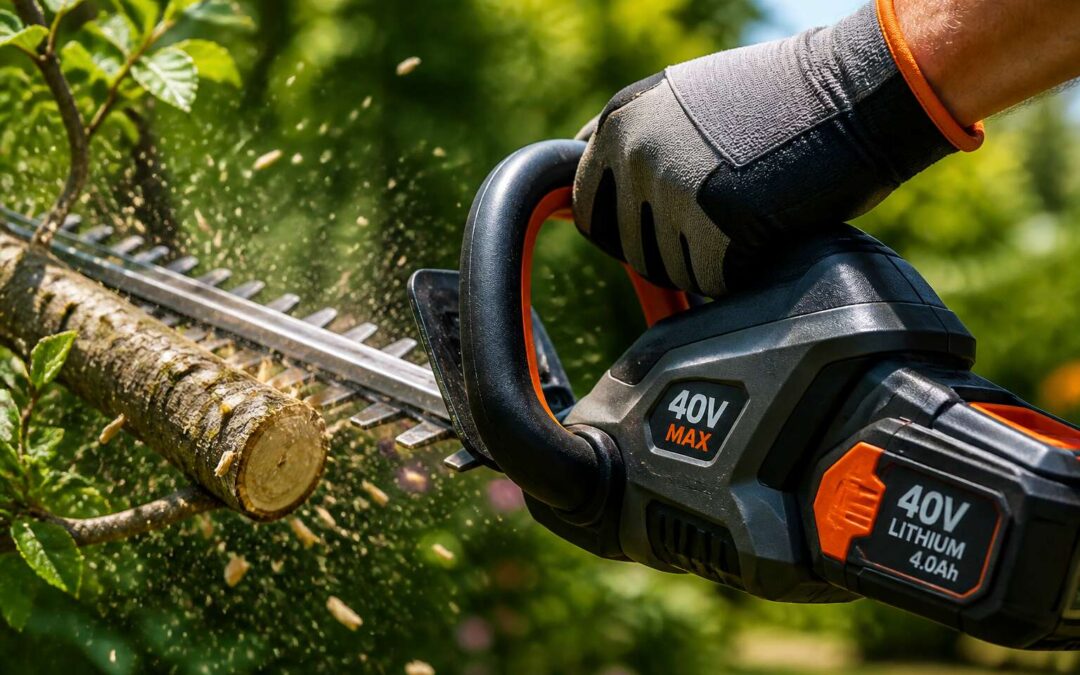
Hedge trimmers serve a different purpose than mowers or edgers. They shape the volume of a garden, the dense green walls that define boundaries and screen neighbours. In South African gardens, where plumbago and wild olive grow vigorously, the garden tools power in a hedge trimmer decides whether shaping takes an afternoon or a weekend. A petrol model with a 600 mm blade cuts through old wood, while a battery unit suits lighter maintenance on younger growth.
Pole saws extend your reach into higher branches without a ladder. The garden tools power here must lift a cutting chain overhead repeatedly, so weight matters as much as torque. For taller shrubs and lower tree limbs, a telescopic pole with a small chainsaw head offers control. I have found that the balance of a pole saw matters more than raw engine size.
- Hedge trimmers for formal hedges and topiary
- Pole saws for overhead branches beyond arm’s reach
Leaf blowers and vacuums for cleanup
The final act of any garden ritual is the clearing. After the cutting and shaping, the detritus of creation litters the earth. The garden tools power shifts from force to finesse. A leaf blower in South African gardens, where jacaranda and oak trees drop their seasonal debris with abandon, becomes the mediator between order and wildness.
The tasks they handle:
- Clearing delicate leaves from paved surfaces
- Evicting grass clippings from the flower beds
- Managing the fine layer of pollen and dust on the stoep
- Aerating a compost heap with the vacuum’s reverse function
A blower directs, while a vacuum collects and mulches. The garden tools power here is not about aggression, but intention. A good battery model maintains its full force for the entire task, with no cord binding you to the wall and no petrol smell tainting the morning air.
Cultivators and tillers for soil preparation
The dry winter wind carries the scent of dust and fallen leaves, a familiar prelude to the Cape gardening season. It is a time when the earth hardens and the desire for a fresh start in the soil begins to stir. Before you can dream of spring blooms, you must first conquer the compacted ground beneath your feet. This is where the true measure of your garden tools power comes into play, transforming a backbreaking chore into a satisfying ritual.
For the South African gardener, the distinction between a cultivator and a tiller is more than just semantics. It is about matching the machine to the mission. A cultivator is your precision instrument, the scalpel for weeding between established rows of vegetables or aerating the top few inches of soil without disturbing the delicate root systems below. It is lighter, often more maneuverable, and perfect for those weekend afternoons spent tidying up the beds.
Conversely, a tiller is the brute force for larger projects. When you are breaking new ground for a vegetable patch or amending heavy clay soil with compost, you need the deeper tines and increased torque that only a serious machine can provide. The choice hinges on the scale of your ambition. If you are maintaining an existing garden, a cultivator will suffice. If you are carving a new plot out of the veld, a tiller is your indispensable ally.
Navigating the power options requires a clear head. The most common fuel is the two-stroke petrol engine, which offers unrivaled freedom of movement. You are not tethered to a wall socket, which is a significant advantage when working in a long, narrow property that stretches far from the house. However, the sound of a two-stroke engine can disturb the peace of a quiet neighbourhood, and the smell of mixed fuel is a permanent fixture in many a garden shed.
Electric models, on the other hand, provide a quieter, cleaner experience. The modern brushless motor delivers surprising amounts of power for a machine with no cord. But the cord is the catch. In a standard suburban plot, you will often find yourself wrestling with extension leads, trying to avoid cutting through them with the very tines you are using. For those with a smaller urban garden, an electric cultivator is a manageable and eco-conscious option. Yet, given the recent concerns over load shedding, a cordless battery model offers a distinct advantage, allowing you to work regardless of the municipal power supply.
Here are the key tasks where this machinery shines:
– Breaking new ground: A powerful tiller is essential for converting a patch of lawn into a productive bed.
– Soil amendment: Working in compost and manure is far more effective with a machine that can churn it thoroughly into the existing dirt.
– Weed control: A cultivator makes quick work of young weeds before they have a chance to establish deep roots.
– Aeration: Loosening compacted soil after heavy summer rains allows water and nutrients to penetrate more effectively.
– Preparation: Creating a fine seedbed for sowing or transplanting is the final, critical step.
One must also consider the specific challenges of South African soils. Many regions are dominated by heavy clay, which becomes rock-hard in the summer heat and sticky in the winter rain. This environment demands a machine with not just horsepower, but also durable tines. The bolted tines on a quality cultivator are often made of heat-treated steel, capable of withstanding impacts from the ubiquitous small stones found in our soil. A cheaper model with flimsy tines will soon bend, rendering the tool useless.
The handling and safety aspects are equally important. A powerful tiller has a distinct kick when the tines hit a root or a rock. You need a machine with a safety switch that stops the tines when the handlebar is released. Furthermore, the weight and balance of the tool dictate how tired you will be after thirty minutes of work. A well-designed cultivator will have the engine positioned to distribute weight evenly, allowing you to manage the machine with confidence rather than wrestling it.
For the hand tool enthusiast, the wheel hoe remains a viable, silent alternative. It is a perennial choice for those who value the physical connection to the soil. It lacks the brute force of a motor, but it offers a quiet, reliable method for weeding and cultivating in tight spaces.
Ultimately, the decision on which machine to purchase should be based on a realistic assessment of your garden’s demands. The garden tools power you choose will either be a source of frustration or a gateway to a more enjoyable gardening experience. Whether you opt for the raw power of petrol or the convenience of battery, the goal is to work with your soil, not against it. Weighing the size of your plot against the density of your soil will lead you to the right companion for the season ahead.
Chainsaws for heavy branch removal
For the gardener facing a gnarled old oak after a storm, the chainsaw steps forward as the definitive test of garden tools power. The weight of the branch overhead becomes a negotiation of torque and control. A battery-powered model offers instant starts and low vibration for a quick trim, but a petrol engine still holds the throne for limbing in the deep, wet winter.
I have found that the blade speed and anti-kickback technology matter more than raw horsepower on a residential plot. A sharp, narrow-tipped bar slips easily between tightly packed branches, while a longer guide bar adds leverage for those stubborn thick boles. The finest machines are the ones that feel like extensions of your own two arms.
Safety, Maintenance, and Storage
Proper handling and protective gear
Walking onto a morning lawn in Johannesburg, the dew heavy on the grass, I think about the quiet risks hidden in every machine. Garden tools power demands respect before delivering results. Read the manual first. Dress for the work, not the street.
Wear closed boots, thick gloves, and eye protection. Ear defenders matter for gas engines. Never refuel a hot motor.
- Check blades and belts before every session.
- Inspect batteries for cracks or swelling.
- Store units dry and out of reach of children.
After each use, clean the housing and oil moving parts. A sharp blade is a safe blade. Regular maintenance extends the life of your garden tools power and prevents surprise breakdowns. Lock equipment in a ventilated shed, away from moisture and pests.
Routine maintenance for extended lifespan
The hum of a well tuned engine is a small triumph. I have come to understand that garden tools power is not a single burst of energy but a sustained conversation between the operator and the machine. That conversation demands a ritual of care. Regular maintenance extends the lifespan of your equipment and transforms a chore into a quiet act of stewardship. The morning dew on the grass is a reminder to check the underside of the mower for caked clippings before they harden into a stubborn crust.
The ritual begins with a simple acknowledgment. You read the manual not as a formality but as a map of the machine’s expectations. You listen for the subtle changes in pitch, the grind that was not there last week. A loose belt or a dull blade will betray you at the worst moment, usually under a sky threatening rain. The following acts keep the spirit of the device alive:
- Wipe the housing down after every session to prevent corrosion from acidic sap.
- Apply a thin coat of oil to pivot points and cables to ward off friction.
- Sharpen or replace the blade every few months to ensure a clean cut that heals quickly.
- Give the air filter a gentle tap and replace it annually for gas models.
Storage is the final chapter in this narrative of longevity. A shed that breathes, with airflow that discourages rust, is a sanctuary. You hang tools on hooks rather than let them rest on damp concrete. Batteries come inside, tucked away from the chill of a Highveld winter. The fuel tank is either emptied or stabilised, never left to varnish the carburetor. This attention to the quiet hours of rest ensures the garden tools power will answer when you call it again. The machine becomes a companion, faithful because you were faithful to it first.
Safe storage solutions for power equipment
In a country where the Highveld sun can turn a morning chore into a test of endurance, the true measure of garden tools power is often how safely you manage it during those frantic hours. The haste to finish before the heat becomes unbearable is precisely when errors occur. A cord left taut across a damp lawn, a blade spinning a little too close to a bare ankle, these are the small follies that puncture a peaceful Saturday. One must approach a machine with the respect one would afford a restless thoroughbred, firm and attentive, never distracted.
Beyond the immediate handling of the machine lies the wisdom of anticipation. The equipment that sits idle in the corner of the shed for six months of the year holds its own quiet dangers. A battery left on a charger until it swells, a fuel line cracked by the sun, these betrayals surface just as you reach for the tool. There is a particular art to shutting down properly. You allow the engine to idle before cutting the ignition in petrol models, clearing the residual fuel from the lines. For electric and battery variants, you remove the battery entirely and store it at a partial charge, not a full one. A clean, dry rag wiped over the metal surfaces after cleaning prevents the rust that spreads quietly in the coastal humidity of Durban or the dry chill of a Johannesburg winter.
The storage solution itself requires a certain deliberate grace. A shed that serves as both a dumping ground and a tool repository is a trap. You allocate a specific space for each implement, hanging trimmers by their handles and ensuring sharp edges face the wall. This organisation prevents accidents when you reach blindly for a rake in the half-light. Furthermore, consider the specifics of the South African environment. The intense UV rays degrade plastic housings and rubber grips over time, so a covered shelf or a cabinet is a wise investment. This secure disposition of your equipment ensures that the potential of your garden tools power is always at hand for the next skirmish with the bougainvillea, ready to be wielded with confidence and safety.
Comparing Top Brands and Value
Evaluating warranty and customer support
In the quiet hum of a suburban morning, there is a particular satisfaction in taming the wild. But beneath that satisfaction lies a simple truth: garden tools power dictates the difference between a chore and a ritual. The right machine whispers through overgrown hedges, while the wrong one screams in protest, leaving you with frayed nerves and a patchwork of half-finished work. Choosing your arsenal is a matter of understanding the energy that drives it.
Consider the source of that energy before you commit. Battery-powered models offer a phantom-like freedom, unshackled from the wall, gliding through the yard without the trip hazard of a trailing cord. However, this liberty is often fleeting; the battery’s life fades just when the job thickens. Conversely, the corded electric tool is a tireless workhorse, humming with an unrelenting consistency that never wavers, though its range is dictated by the length of your extension lead. Then there is the gas engine, a brute that roars with raw, unapologetic force, ideal for heavy, sustained labour but demanding a certain mechanical sympathy during maintenance.
Beyond the fuel, the promise of longevity lies in the warranty and the brand’s reputation. A generous warranty is not a marketing gimmick; it is a pact, a manufacturer’s declaration of confidence in their engineering. When you pick up a tool, check the seams, feel the weight, and ask yourself if the company stands behind the metal. A robust support network means you are never alone when the gears grind to a halt.
To navigate this landscape, consider your specific needs in a more structured manner:
1. Battery Platforms: Stick to one brand’s ecosystem to share batteries across multiple devices, saving cost and storage space.
2. Charging Time: Look for fast chargers that replenish a depleted cell in under an hour, minimising downtime.
3. Torque Ratings: For drills and impact drivers, higher torque translates to easier penetration into hard, sunbaked earth.
Now, let’s talk about the specific implements. A push mower is fine for a postage-stamp lawn, but a self-propelled model with a strong motor is a blessing on sloped terrain. For the edges where grass dares to creep, a string trimmer with a swivelling head offers precision; ensure it has enough power for thick, wiry weeds. When tackling shrubs, a hedge trimmer with a longer blade and a dual-action cutting system reduces vibration, sparing your hands from that numbing buzz.
For the ground itself, a cultivator’s tines need substantial torque to break up clay soil, while a chainsaw requires a high chain speed for clean, safe cuts through dead branches. Leaf blowers, whether handheld or backpack, are defined by their air volume, not just their speed, to move wet, heavy foliage from the cracks of a paved stoep.
Ultimately, the true measure of the tool is the torque that meets the resistance. It is the silent promise that the job will be finished before the sun sets, and that your hands will be steady enough to enjoy the quiet afterwards. The power you choose is the invisible hand that shapes the landscape, so choose the force that answers your call without hesitation.
Reading performance reviews and ratings
Comparing top brands reveals meaningful differences in garden tools power and long-term value. EGO and DeWalt lead the battery sector with commercial-grade brushless motors and robust 56V or 60V platforms, while Ryobi offers a more accessible price point without sacrificing basic reliability. Milwaukee excels in raw torque, particularly with its high-output M18 system, but the premium cost demands justification for frequent use.
Performance data separates the pack. Torque ratings above 40 Nm suit heavy soil cultivation, while airflow exceeding 450 CFM moves wet leaves with ease. Run times vary by ampere-hour capacity, yet brand ecosystems matter equally. A single battery platform can power a blower, trimmer, and chainsaw, reducing future spending if you commit over time.
1. Top-tier brands carry 5-year warranties on batteries and 5-year tool coverage, reflecting confidence in garden tools power.
2. Budget lines often include 2-year warranties, which prioritize lower upfront cost over extended peace of mind.
3. Replacement battery pricing differs widely; cheaper initial kits sometimes lead to expensive spare cells later.
The Stihl petrol range remains strong for heavy commercial work, though electric models now match most residential needs. My own experience with a 58V system showed consistent power across a full season, and the brushless motor never faded under thick growth. The real metric of value is reliability across years, not just sticker price. Assess your yard size, frequency of use, and required force before settling on a brand. A thoughtful purchase of garden tools power saves both money and frustration over the long haul.
Budgeting for initial cost vs long-term durability
The price tag on a new tool often dictates the decision, but a quick glance at the shelf life tells a different story. That budget-friendly model might save you R500 today, only to demand replacement in two seasons. Meanwhile, a premium unit could serve you for a decade. The real question isn’t what you spend now, but what that spend averages out to over time, especially when considering the raw garden tools power required for tough local conditions.
Consider the ebb and flow of a typical South African gardening year. The initial outlay for a high-end brush cutter is steep, yet the cost of a cheap replacement every eighteen months quickly eclipses it. A few points to watch when balancing that first expense against future durability:
- Assess the gearbox and shaft quality on petrol tools, as these bear the brunt of thick grass.
- Check the battery cell type on cordless models; generic cells degrade faster under our summer heat.
- Consider the availability of local spare parts, as import costs can make a minor repair uneconomical.
Spending a little more on a proven platform, whether petrol or battery, usually brings better bearings and tougher housings. That upfront cash covers engineering that shrugs off sandy soil and hard, dry growth. In the long run, the cost per season of reliable garden tools power tends to favour the higher initial investment, making the budget option a false economy when measured against the lifespan you actually need.
Comparing ergonomics and weight distribution
In the great South African garden, your back is the real battleground. Ergonomics often play a more significant role in your eventual success than the brand sticker on the machine. After thirty minutes wrestling a heavy trimmer, the difference between a comfortable grip and a vibrating metal rod becomes brutally apparent.
When comparing top brands, the focus frequently lands on raw power, but weight distribution dictates how long you can hold that garden tools power steady. A machine that is rear-heavy will constantly tip backward, forcing you to fight the tool rather than guide it. Conversely, a well-balanced unit keeps the centre of gravity close to your body, reducing fatigue and increasing precision for those long edging runs along the paving.
Here is how the weight typically translates across common categories:
– Petrol trimmers: Generally heavier (5-7 kg), but the engine’s counterweight often balances the shaft perfectly, making them usable for extended sessions.
– Battery-powered units: Lighter (3-4 kg), yet the battery pack positioned at the base can create a seesaw effect if the shaft isn’t designed correctly.
– Electric corded models: The lightest option, but the cable drag adds a subtle, persistent pull that can strain the wrist over time.
It is also wise to look past the flagship names and consider the handle design. High-end brands often feature adjustable auxiliary handles and anti-vibration mounts that reduce the dreaded “white finger” sensation. When you put a premium Stihl next to a budget Makita, the difference in balance is evident immediately. The former feels like an extension of your arm; the latter feels like a physics problem waiting to happen.
Ultimately, the value proposition hinges on how the unit fits your physique. A taller user needs a straight shaft, while a shorter user might manage a curved one far better. Testing the tool in-store, lifting it with one hand, and mimicking a sweeping motion will tell you more about its long-term viability than any specification sheet. That impromptu test is your best defence against a costly mistake that leaves you sore on Monday morning.