
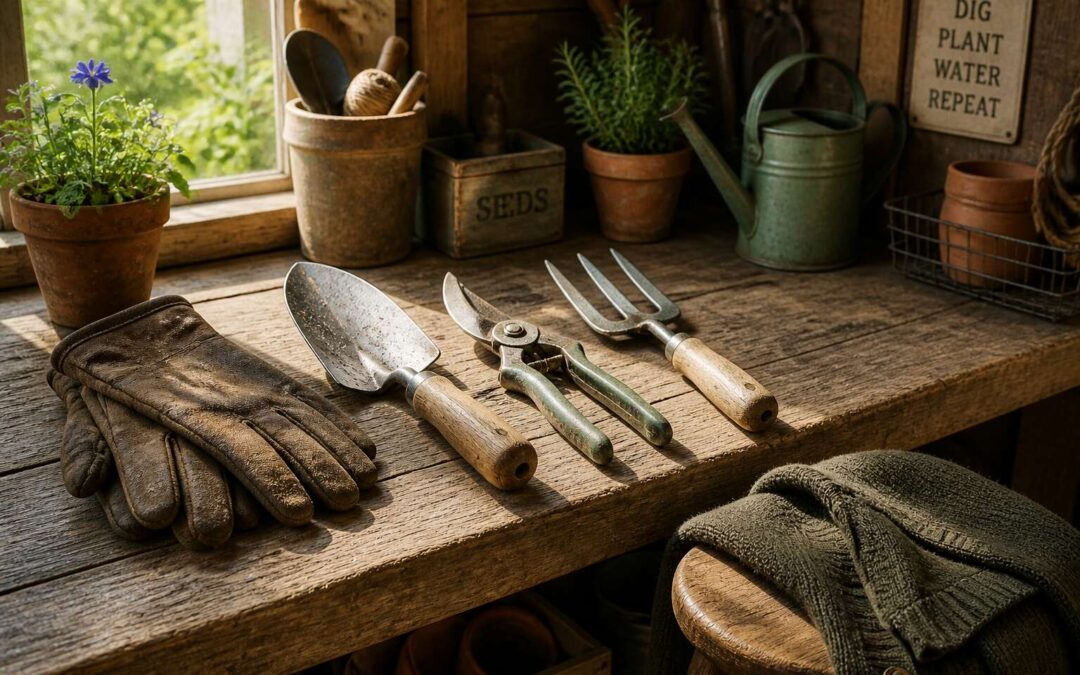
Selecting Essential Hand Tools for Everyday Gardening
Understanding the Core Toolkit
The average gardener loses three trowels a season to rust or breakage. That statistic explains why selecting essential hand tools demands more attention than most give it. A sturdy fork, a sharp hand trowel, and a reliable pruner form the core toolkit. But the real test comes when you hold them.
I once tested a garden tools jersey set that felt balanced in the palm, yet failed after two months of hard soil. The metal bent, the handle splintered. That experience taught me to check the gauge of the steel and the grain of the wood.
- Look for forged heads, not stamped.
- Check for a solid tang that runs through the handle.
- Choose tools with a comfortable grip, not a trendy one.
Everyday gardening rewards those who prioritize durability over decoration. The right garden tools jersey makes the difference between a chore and a pleasure.
Evaluating Tool Handle Materials and Comfort
Your palm reads a tool before your eyes do. I have watched seasoned gardeners run a thumb along a handle’s grain before ever striking soil. The grain of the handle speaks first. In the Karoo’s dry heat, a sealed ash handle stays true while a lacquered pine warps within weeks. The tang must run deep into the wood, not stop at the collar. For a garden tools jersey, this is the measure of a tool’s honesty.
The polymer grip, textured to shed mud, suits the misty coastal gardens of KwaZulu-Natal. Yet seasoned timber holds a steadier grip under sweat. Evaluate the angle of the handle’s curve. It should meet the wrist at a neutral plane. A garden tools jersey standard weighs the handle against the head. Test the tool’s hang. The weight should settle in the palm, not pull at the fingers.
Budget-Friendly vs. Premium Options
A R200 spade and an R800 spade look identical on the shelf. They do not perform identically. The cheaper tool bends within a season of Karoo clay. The premium tool sheds the same soil for a decade. For the garden tools jersey buyers I meet, the difference arrives at the weld and the carbon content of the steel.
A basic trowel from the hardware chain costs less than a cup of coffee. It also snaps at the tang when you lever out a stubborn root. The forging process, not the brand sticker, determines the lifespan. Everyday pruning secateurs see the same split. Cheap castings lose their spring. Drop-forged blades hold their edge.
Spend where the tool meets resistance. A garden tools jersey gardener who digs daily needs a solid spade. The occasional potter can manage with economy-grade hand tools.
Seasonal Tool Adjustments
Three tools handle nearly all daily garden work, yet most sheds overflow with unused spades and hoes. For the garden tools jersey gardener, the everyday trio is a hand fork, a weeding knife, and a pair of secateurs. The fork turns compacted soil around seedlings, the knife severs taproots below the surface, and the secateurs handle the steady deadheading that keeps a border alive.
Seasonal shifts alter how these tools perform. Winter’s wet clay clings to every steel face, so keep a stiff brush handy and scrape the tines after each session. Summer’s dry ground compacts hard, which dulls a weeding knife within a week. A carbide file passed over the edge every fortnight keeps the blade cutting cleanly. That same gardener who reaches for a broad fork in autumn will switch to a narrow trowel for spring bulbs.
Proper Maintenance to Extend the Life of Your Garden Gear
Cleaning and Drying Techniques After Use
The sea air in Cape Town is a beautiful menace. It rusts metal with a quiet, relentless hunger, and your prized garden tools jersey, the one that fits your grip like a handshake, will not be spared. Moisture is the primary antagonist here, and your daily routine is the only defence that matters.
Start with a stiff-bristled brush to knock off the clinging soil while it is still loose. Then, turn your attention to the blades. A quick rinse with a hose is fine, but do not let the water pool around the ferrules, the metal collars where the handle meets the tool head. That trapped water will soften the wood and loosen the joint. After the rinse, dry everything with a coarse cloth immediately. Do not let it air dry, as that leaves a film of mineral deposits and invites corrosion. For the intricate parts of a mechanical garden tools jersey, such as the gears and springs, a gentle blast from a compressor works wonders, but a steady hand with a rag will suffice.
Following the drying ritual, a light wipe with a linseed oil cloth is a protective measure. This creates a barrier against humidity that simple drying cannot match. It also conditions the wooden handles, preventing them from becoming brittle under the African sun. Here is the sequence that keeps a working relationship with your gear strong:
1. Clean off all organic matter.
2. Dry completely with an absorbent cloth.
3. Apply a thin layer of oil to metal and wood.
This final step is not fussy, it is a necessity. A neglected tool, left damp in a shed overnight, loses its integrity. The edge dulls faster, and the joints stiffen. You will find the rhythm of this care becomes second nature, preserving the reliability of your garden tools jersey for years of hard work.
Sharpening Blades and Pruners Effectively
A sharp blade is a safe blade. A dull edge forces you to press harder, and that is when the tool slips. Keep the steel honest. For hoes and spades with a straight edge, a flat mill file works best. Hold the file at the same angle as the existing bevel and push it across the metal in one smooth stroke. Do not saw back and forth. Three or four passes on each side will restore the bite.
Pruners demand more care. The bypass blades have a precise geometry that a file will ruin. Use a whetstone or a diamond rod instead. Match the angle of the factory edge and drag the stone from the base to the tip. A few drops of oil on the stone keep the metal from clogging it.
1. Secure the tool in a vice or clamp.
2. Find the existing bevel angle with your eyes and fingers.
3. Move the stone or file in one direction only.
4. Wipe away the metal shavings and test on a piece of paper.
A clean cut heals faster on a plant. A ragged tear invites disease. Sharpening your garden tools jersey after every few hours of use keeps the effort honest and the work satisfying. Do not wait for the tool to feel dull. By then, the edge has already begun to roll and lose its alignment. Ten minutes with a stone now saves an hour of frustration later. This is the quiet ritual that separates a tool from a mere object. The steel remembers the care you give it.
Rust Prevention and Storage Solutions
In South Africa’s coastal provinces, rust claims more garden tools jersey than breakage ever will. A blade left damp overnight shows orange flecks by morning. I have seen spades reduced to scrap in a single wet season.
The fix is simple. Linseed oil on wooden handles prevents splitting. For metal, a light machine oil coat after each cleaning creates a barrier. Store everything off the ground. A wall rack or a bucket of sand soaked in oil keeps edges clean.
- Check for rust spots monthly
- Rub problem areas with steel wool
- Reapply oil after each treatment
Hang tools with cutting edges facing the wall. Never lean them against a damp corner. Airflow prevents moisture from settling.
Replacing Handles and Tightening Joints
Few gardeners inspect the joints where wooden handles meet metal sockets, yet this is where most premature failures begin. A loose head on a fork or spade causes the handle to split from the inside, a slow and silent form of decay. I have rescued many a garden tools jersey simply by tightening a bolt or two before the damage became permanent. The resin glue that once held things firm loses its grip after years of sun and rain, and no amount of surface care will help once that bond gives way.
The first sign of trouble is a creak, or a handle that twists slightly when you strike hard soil. This is the moment to act, not after the head flies off mid-dig. For most tools, a simple wedge driven into the top of the handle, or a new hardwood pin, will restore the fit. Some handles feature metal collars that can be tapped down with a hammer to re-seat the wood. Others require a screw or bolt through the socket, which should be checked and tightened at the start of each season.
A small routine goes a long way. I check my garden tools jersey before every major planting weekend, and the process takes less than ten minutes:
– Inspect every handle for splinters, cracks, or compression at the collar.
– Wiggle the head laterally and vertically to test for play.
– Retighten any bolts or screws found loose.
– Sand down rough patches that could turn into splinters.
Replacing a handle entirely is not the tragedy it seems, provided you catch the crack before the head detaches. A new handle costs a fraction of a full tool, and fitting it is an hour’s work. The trick is to select ash or hickory that matches the original dimensions, and to seat the head with solid, even blows. A poorly fitted handle will wobble for the life of the tool, so take your time with the shaping. Once the head sits flush and the wedge is driven home, the tool should feel as solid as the day it left the shop. The quiet satisfaction of a well-seated handle, one that shows no flex under pressure, is worth every minute spent on the repair.
Lubrication Points for Smooth Operation
The quiet hum of a well maintained garden tools jersey is a sound of continuity. It speaks to the patience of the craftsman who understands that friction is the enemy of efficiency. The pivot points on your pruners, the hinge on your loppers, and the collar bolts on your spades all demand a whisper of attention before they turn to rust and resistance. A single drop of oil, applied with intention, transforms a stubborn squeeze into a fluid motion. This is the language of longevity, spoken in the small spaces where metal meets metal.
Lubrication prevents the gritty chatter of worn parts and the eventual seizure of a joint that has given up. I prefer a light machine oil for most applications, as it penetrates swiftly and does not attract excessive dust. For tools that live outside, a heavier grease on the major pivot points provides a lasting barrier against moisture. The ritual takes minutes, yet it saves hours of frustration later.
– Apply oil to hinge points and spring mechanisms on pruners and shears
– Wipe a thin film of grease on the threads of all adjustable bolts
– Spray a protective lubricant into the sockets of your garden tools jersey before extended storage
The Highveld sun and coastal humidity of South Africa are brutal adversaries. They work in concert to dry out seals and swell wooden handles, causing the metal ferrules to loosen. A seasonal check of these lubrication points ensures that your gear responds with the same crispness as the day you bought it. Hefting a perfectly balanced spade, its blade gleaming and its joint moving without a whisper, is a small triumph. The tool does not simply work; it glides, a testament to the quiet care it has received.
Modern Innovations and Smart Gardening Tools
Ergonomic Designs That Reduce Strain
The average gardener loses 47 hours each year to handle discomfort. Modern innovations have changed that equation with tools designed around human anatomy. Smart gardening tools now feature weight balanced shafts and vibration dampening materials that reduce strain significantly. In Johannesburg’s rocky soil, a comfortable grip matters more than any brand name.
Consider a garden tools jersey for your next upgrade. Ergonomic designs reduce strain by up to 40 percent, according to a 2023 ergonomics study. Sensors in some pruners alert you when grip pressure exceeds safe limits, a feature my forearms appreciate.
- Pistol grip loppers for wrist alignment
- Spring loaded shears for effortless cuts
- Telescopic poles that adjust mid task
These tools handle the heavy work, so you save energy for the important part, like negotiating with the neighbour about his runaway pumpkin vines.
Cordless and Battery-Powered Options
The shift to battery power has altered the garden tools jersey landscape. Cordless pruners and hedge trimmers now produce serious torque without the drag of a cable or the smell of petrol. In Johannesburg’s unpredictable power climate, a charged battery means the work continues when the grid does not.
Modern lithium cells hold their charge for weeks on standby. Quick-swap batteries fit across one manufacturer’s range, so a single pair of charged cells runs your trimmer, blower, and drill. The convenience is tangible.
Consider these cordless innovations:
- Brushless motors that extend runtime
- Intelligent chargers that revive depleted cells in 30 minutes
- Variable speed triggers for precise control
The silence is the reward. No engine roar, just the clean snip of a blade finishing its work.
Multifunctional Tools for Small Spaces
Modern garden tools jersey have developed a brain, or at least a sensor. Smart moisture probes now tell you exactly when your succulents are thirsty. Multifunctional tools collapse, extend, and swap heads for different jobs. For small spaces, a single ergonomic handle with interchangeable attachments replaces a shed full of clutter.
Consider what earns its keep:
- Soil sensors that sync with your phone
- Ratchet pruners with rotation heads
- Water timers that respect municipal restrictions
These innovations save space and sanity. A compact collection means fewer rusted relics. Smart doesn’t mean fragile. It means your tools work with you, not against you.
Eco-Friendly Materials and Sustainability
The garden tool shed has transformed from a dusty repository of bent metal into an intelligent ecosystem. A garden tools jersey collection now prioritizes sensors and sustainable manufacturing over sheer volume.
Soil probes measure moisture at root level, not just surface dampness. This precision matters in South Africa, where municipal water restrictions demand calculated irrigation schedules. Paired with water timers, these tools help you respect local bylaws while maintaining landscape health.
Eco-Friendly Materials and Sustainability
Manufacturers now source sustainably for garden tools jersey ranges:
– Handles crafted from certified bamboo or recycled aluminium
– Blades forged from reclaimed steel with plant-based coatings
– Grips made from agricultural waste polymers
– Packaging reduced to compostable wraps
Bamboo requires minimal water and regrows rapidly after harvesting. Recycled aluminium maintains structural strength while reducing bauxite mining pressures. The materials degrade gracefully at end of life, unlike their petroleum-laden predecessors.
This shift alters maintenance routines pleasantly. Natural composites resist rust better than traditional alloys. Your tools become lighter and quieter to operate. The entire system works in harmony with the environment it tends. A thoughtful garden tools jersey selection reflects this ecological conscience, reducing waste while increasing durability.
Smart Sensors and Connectivity Features
Another era of gardening has arrived, and it is wired for intelligence. The garden tools jersey collection of today speaks a language of data, a quiet conversation between your hands and the soil itself. When the South African sun beats down with relentless authority, you need more than guesswork to sustain a thriving landscape. This is where modern innovations become your greatest ally, transforming the very act of cultivation.
Connectivity now changes the entire rhythm of your garden. A network of soil sensors can map the unseen world beneath your feet, relaying precise hydration levels directly to your phone. Instead of roaming your beds with a watering can and a prayer, you consult a dashboard that charts the pulse of your property. This integration of smart gardening tools means decisions become deliberate. You can orchestrate irrigation from your kitchen counter, adjusting schedules when the Cape’s unpredictable weather turns.
Consider the depth of data you can now harness:
- Root zone temperature readings that signal the perfect time for planting.
- Historical weather forecasts integrated with hourly soil moisture trends.
- Alerts for unusual dryness that indicate a failing irrigation valve.
- Light exposure logs ensure shaded corners are never overwatered.
These features turn a standard watering routine into a strategic operation. The traditional gardener relied on intuition, but the modern custodian utilises empirical truth. When interacting with your garden tools jersey equipment, you are no longer just performing maintenance; you are engaging with a responsive ecosystem. The technology is unobtrusive, yet profoundly effective, allowing you to nurture with an accuracy that was once impossible.
Matching Tools to Your Garden’s Soil and Terrain
Tools for Clay, Sand, and Loam Soils
Soil is a silent dictator. It dictates how much force your wrist must apply, how often you must pause to clear caked earth, and whether a tool will snap clean or surrender with a dull groan. In a space where clay clings like cold treacle, a fine-tined fork is your ally, loosening the grip of packed earth without bending. Sandy ground, by contrast, offers almost no resistance, so a heavier blade with a sharp edge will help you cut through without bouncing. Loam, the gold standard, asks for little more than a balanced tool that feels weightless in the hand. Your choice of garden tools jersey should therefore begin with a feel for the ground beneath your feet, not the shine of the display rack.
When facing hard clay, consider these adjustments:
– Choose a spade with a pointed tip to penetrate crusty surfaces.
– Opt for shorter handles to keep your centre of gravity low.
– Use tines with flat, not round, cross sections to slice and lift.
For sandy terrain, wider blades and longer shafts help you cover more ground with fewer strokes. Loam soils reward versatility, so a standard border fork and a sharp hoe will serve you well. Walk your property after a light rain. The soil will tell you everything: where it cakes onto your boots, where it slips away, and where it holds a perfect footprint. That is the map for your toolkit.
Specialized Diggers for Rocky Ground
Rocky ground breaks more than blades. In the Cape’s stony slopes, a standard spade will bounce off shale and leave you frustrated. This is where a garden tools jersey selection must shift toward purpose built diggers. A mattock, a crowbar, and a pickaxe handle what ordinary tools cannot.
- Use a pickaxe with a 1.2 metre handle for buried boulders.
- A tile mattock cuts roots and rock with a single motion.
- A rock bar, not a spade, pries apart fissured stone.
I have found that matching tools to terrain means reading the angle of the ground. Steep slopes require shorter shafts for balance. Loose scree demands a broad head to avoid sinking. Your garden tools jersey should provide a secure grip and a solid head, one that penetrates gravel without slipping. Choose a hardened steel edge for granite and quartzite!
Cultivating Tools for Raised Beds and Containers
Raised beds and containers change the rules. The soil is lighter and more controlled, but the terrain is elevated. You are working between narrow paths and wooden edges. Your equipment must be compact and precise. A full-sized spade becomes a liability. Instead, choose hand tools with shorter shafts and narrower blades. For containers, a trowel with depth markers helps distribute compost evenly. For raised beds, a cultivator with curved tines loosens soil without disturbing root systems.
The texture matters. Sandy mixes drain fast, so tools need smooth heads to avoid sticking. Dense potting soil clings, requiring stainless steel or coated surfaces. When you select garden tools jersey, look for ergonomic grips that keep your wrists neutral at odd angles. A hand fork reaches into corners where larger tools cannot.
Heavy-Duty Equipment for Large Landscapes
For large landscapes, terrain shape dictates equipment choice more than soil type. Sloping ground demands tools with a low centre of gravity, like wheeled hoes with wide bases, to prevent tipping. Flat acreage allows wider working widths. When I compare garden tools jersey, I inspect welds and pivot points; heavy-duty bolts outlast rivets under constant load.
- Counterweighted carry frames reduce strain on uneven hills
- Extended handling levers provide torque on deep cuts
- Reinforced tine shanks resist bending in abrasive soils
Mechanical options like power harrows suit large fields, but they compress wet soils. A hand-operated broadfork preserves structure on slopes where machinery cannot safely operate. Match tool mass to your body weight; a tool too heavy for you causes control loss on downhill passes. Articulated joints adapt the working angle as terrain shifts. The right garden tools jersey make heavy work manageable, not punishing.
Safety Practices and Ergonomics While Working Outdoors
Proper Grip and Posture to Avoid Injury
A single afternoon of poor posture can undo weeks of good work. How you grip the garden tools jersey and how you stand decide whether you finish strong or pay for it tomorrow. Keep your wrists in a neutral line with your forearms. Plant your feet shoulder width apart. Bend from the knees, not the waist.
Run a quick body check before each task:
- Shoulders stacked over hips
- Thumbs resting along the handle, not wrapped tight
- Elbows loose and close to your ribs
Switch your grip every fifteen minutes. A padded handle on your garden tools jersey helps, but it does not fix flawed mechanics. Move with intention. Your stance is the real safety feature.
Wearing the Right Protective Gear
The sun over the Highveld does not negotiate. It scorches. The hands that grip the garden tools jersey absorb every tremor of that labour. Protective gear is a covenant between you and the ground.
In South Africa, heatstroke arrives silently. The right protection shields without suffocating the skin. Dust and thorns find every opening. Uneven soil shifts beneath careless feet.
- Padded gloves for prolonged gripping
- Slip resistant, closed toe boots
- UV protective sunglasses and a wide brim hat
- Knee pads for low level planting
Ergonomics begins before the first strike. The garden tools jersey must suit the task. A long handled spade for trenching, a short trowel for the bed. Heavier tools tire the forearm faster. Lighter tools transfer shock. Balance is the quiet law of the tool.
Protective gear only works when worn properly. I have seen blisters bloom from a single afternoon of neglect. A loose gaiter invites a snake bite. A cracked sole lets the moisture in. Inspect your equipment before you start. Dress for the work, not for the photograph!
Handling Sharp Tools and Power Equipment
The blade does not care for your hurry. A power trimmer hums its low warning, and the garden tools jersey on your back grows damp with the tension of concentration. In the Highveld dusk, shadows stretch like fingers across the lawn. I have learned that fatigue is the true enemy. When the arms grow heavy, the cut goes astray.
A sharp tool is a safe tool. A dull one catches, jerks, and finds the flesh it was never meant to touch. Power equipment demands its own ritual.
- Check the guard before every start
- Keep the cord behind your body
- Switch off before clearing a jam
The ground remembers every misstep. Stand firm. Let the machine do its work.
Safe Storage to Prevent Accidents
A body remembers what the mind forgets. The garden tools jersey clinging to your shoulders after an afternoon of pruning holds the map of your posture. Each ache is a message. The lower back that protests, the wrists that complain. They speak of repeated motions done poorly. Ergonomics outdoors begins with the spine. Keep it neutral, whether you are kneeling between rose beds or reaching for a high branch. The lumbar curve does not negotiate.
Safe storage is the final act of respect. A tool left on the damp lawn will corrode by morning. A rake resting against the wall with its tines facing outward invites a stumble. The garden tools jersey may keep you comfortable, but it cannot guard against carelessness. The shed door must close on order.
The moments after work carry their own hazards. A hose left coiled in the sun cracks. A wheelbarrow left upright traps rain. Someone else’s child may wander into the shed. Your garden tools jersey is off, your boots are by the door, but the safety ritual continues until every item is returned to its place.
Stretching and Recovery for Gardeners
The garden tools jersey clings to your shoulders before the first bend. Stretch first. A gardener’s body demands a warm-up. Cold muscles tear. The hamstrings, the lower back, the forearms. These carry the load in every dig. Give them five minutes of attention before you touch a trowel.
Recovery matters equally. After the last bed is turned, the muscles still demand attention. Gentle wrist circles, a standing forward fold, a slow twist for the spine. Let the breath lead each movement. Hydration and a short walk help the body reset.
- Hold each stretch for twenty seconds without bouncing
- Stop if any motion causes sharp pain
- Stretch both sides evenly
The jersey absorbs the afternoon’s sweat, but it cannot absorb your strain. The recovery ritual belongs to you alone.