
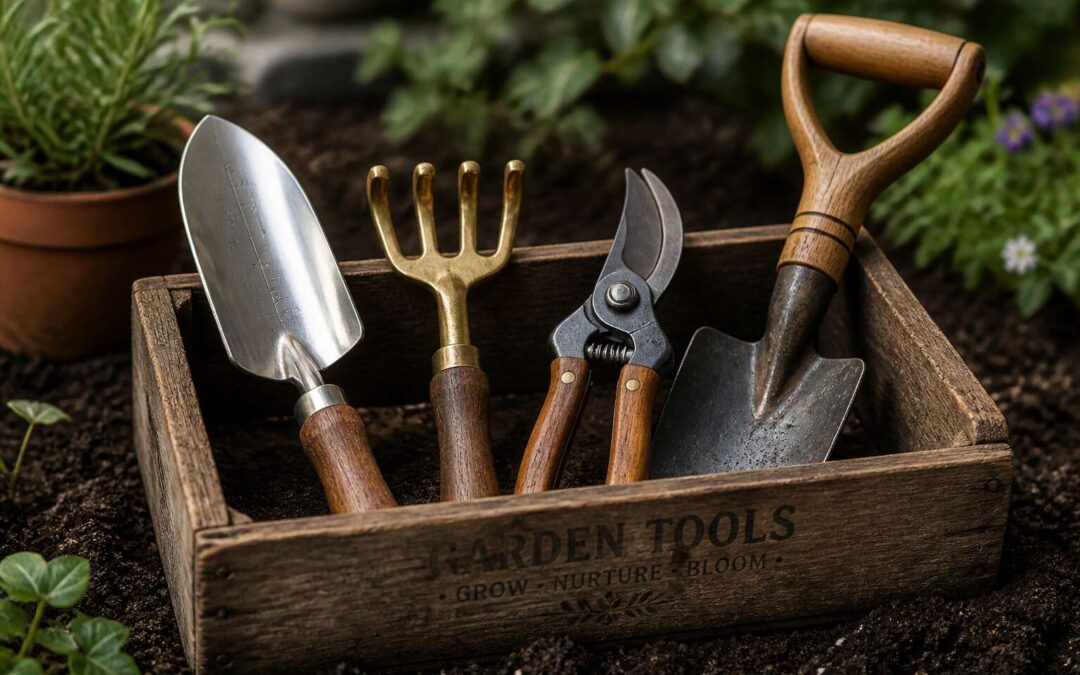
Essential Hand Tools
Trowels and Transplanting Tools
Many gardeners underestimate the quiet power of a trowel, yet this small blade is the architect of your entire plot. It is the instrument for coaxing seedlings from their trays and for making a snug, dark cradle for a young tomato plant. A robust, stainless steel trowel will not bend under the pressure of rocky Cape soil, and its handle should sit comfortably in your palm for hours of work. I find that a narrow, pointed trowel is best for precise transplanting work, while a wider, spade-like head suits the task of scooping compost into larger pots.
The primary function of these tools is to minimise root disturbance during the move from nursery bag to garden bed. A transplanting tool, with its longer, thinner blade, reaches deep to lift a root ball intact, preserving the delicate network that sustains the plant. Together, they form the fundamental duo for propagation and planting. When considering what garden tools do you need, remember that these hand tools are non-negotiable for the serious gardener. The practical uses are many:
– Lifting and dividing perennial clumps.
– Planting bulbs at the correct depth.
– Mixing soil amendments into planting holes.
– Weeding out stubborn taproots.
Pruners and Shears
Every branch, stem, and cane resists your hand with a stubbornness that begs for a sharp blade. Pruners and shears are the instruments of decisive action, the tools that shape the very skeleton of your garden. A clean cut heals fast, while a ragged tear invites disease and pests to settle in for the season. This is where the true character of your plants is defined, one deliberate snip at a time.
Bypass pruners are the workhorses for most living growth, with a sharpened blade that slides past a thick counter-blade for a precise, scissors-like action. Anvil pruners, with their single blade meeting a flat surface, are better suited for cutting away dead, brittle wood where a crushing action is less of a concern. The choice between them fundamentally changes how your plants respond.
Consider what tasks your pruners will perform. The answer to what garden tools do you need often comes down to the specific plants you tend. A quality pair of shears is essential for shaping hedges and softening the harsh lines of established shrubs, offering leverage and control for larger tasks.
- Cutting back woody stems on lavender and rosemary after flowering.
- Trimming invasive vines that choke fences and walls.
- Thinning out the dense canopy of fruit trees for better airflow.
- Harvesting tough-stemmed vegetables like kale or broccoli.
For the thick, succulent leaves of aloe or the resilient growth of fynbos proteas, a robust pair of secateurs is more than a convenience. It is a necessity that protects your hands from fatigue and your plants from damage. The crisp, decisive action of a well-maintained tool feels like an extension of your own will, turning a tedious chore into a moment of pure control.
Garden Forks and Cultivators
What garden tools do you need when the soil itself demands attention? The answer often lies beneath the surface, where the real work begins. A garden fork is your primary instrument for breaking the stubborn crust of compacted earth. It does not simply scratch the surface; it penetrates, lifts, and opens the ground to air and water. The tines work through clay and rocky patches that would resist a lesser tool, turning hardpan into a receptive bed for roots.
Cultivators serve a different purpose, one of refinement and close engagement. They break up the clods left behind by the fork, teasing out the texture that allows fine seeds to establish themselves. These tools invite a deeper intimacy with the soil, revealing its composition, its moisture, and its readiness. This is the quiet conversation between gardener and ground.
Consider the specific functions that dictate your choice:
– A broad fork for turning over perennial beds and loosening deep root zones.
– A hand cultivator with curved tines for working between established plants without disturbing their neighbors.
– A three-pronged cultivator for breaking up crusty topsoil before watering.
– A border fork for edging and working in tighter spaces.
Each implement answers the question of what garden tools you need with a different purpose, yet all serve the same end. The act of digging becomes a meditation on the cycle of growth, a physical commitment to the season ahead. Without these tools, the soil remains a closed book, and the garden a promise never quite fulfilled.
Hand Shovels and Scoops
A hand shovel feels different in the palm. It has a deeper blade than a trowel, built for displacement rather than precision. In a South African garden, where rocky soil often mocks a thin spade, this tool drives through with force. The scoop, its blunt-nosed cousin, excels at moving compost, mulch, and loose fill. Together they answer what garden tools you need when bulk meets the awkward space between roots.
- Widening a hole for a young fruit tree without slicing through lateral roots.
- Scooping bone meal into a planting trench with one hand.
- Shaving off a layer of clay to level a stepping stone.
I have used this pair in cramped raised beds and open beds alike. Each motion engages the ground directly. A hand shovel breaks the soil’s resistance; a scoop collects the evidence. Trust me, the difference will surprise you!
Digging and Soil Preparation Equipment
Spades and Shovels
The question of what garden tools you need often gets answered with the bare minimum, but serious soil work demands more. A spade and a shovel are not interchangeable, a distinction many beginners overlook. The spade’s flat blade is designed for slicing into compacted earth and creating clean edges. Its primary role is to sever roots and turn sod with precision, making it an instrument of accuracy rather than brute force. The shovel, with its curved scoop, is built for moving material, whether that is loose soil, compost, or mulch. Both are essential, but they serve different purposes in the rhythm of garden creation.
South African soils vary wildly, from the red clay of Gauteng to the sandy coastal plains. This variability means your choice of tool must be responsive to your local conditions. A sharp spade is a necessity in heavy turf, while a sturdy shovel handles the transport of bulky organic matter. Consider the parts of the tool as much as the whole:
– The blade material, with boron steel offering a superior edge.
– The handle length, where a T-handle provides extra leverage.
– The tread or footrest, which saves your boots and your back.
The ergonomics of these tools often dictate the success of a large project. A poorly designed handle transfers strain to the lower back, turning a productive morning into a week of recovery. Investing in a spade with a proper footrest and a smoothed, ergonomic grip is not a luxury. It is a direct investment in your physical resilience. For the dedicated gardener, the answer to what garden tools do you need is often found in the weight and balance of these implements. The right tool should feel like an extension of the arm, making the act of digging a meditative practice rather than a punishing chore. A well-maintained spade, cleaned and oiled, becomes a companion in the ongoing conversation with the land.
Garden Forks and Tillers
Roots whisper their secrets to anyone patient enough to listen, but you need the right equipment to hear them. Garden forks and tillers sit at the heart of this conversation, yet they receive far less attention than they deserve when pondering what garden tools do you need. A garden fork is not a shovel with tines. It is a precision instrument for breaking ground without destroying the soil’s structure, and that distinction matters profoundly in South Africa’s unforgiving climate.
The humble digging fork excels at loosening compacted layers, allowing water to penetrate where it is desperately needed. In the heavy clay of the Free State, a sturdy fork proves indispensable during the first earnest attempts at cultivation. Tillers, by contrast, address the same problem on a grander scale. A rear-tine model tears through virgin ground in a way that manual labour simply cannot match, transforming stubborn turf into workable loam in an afternoon. For the gardener wrestling with a new plot, this equipment often answers the question of what garden tools do you need before any other purchase is considered.
– Working compost into existing beds
– Aerating lawn patches that suffer from foot traffic
– Dividing perennials that have outgrown their space
– Lifting root crops such as potatoes without damage
The angled tines of a border fork make short work of weeding between established plants, while the broader digging fork handles the heavy lifting. Tiller maintenance demands respect; clean the tines after every use and store the machine with the fuel stabilised. Bear in mind that overly enthusiastic tilling destroys beneficial fungal networks, so alternate between deep digging and shallow cultivation depending on the season. This is where judgement earns its keep.
Hoes and Mattocks
A single mattock swing can accomplish what twenty minutes of shovel work cannot. When you ask what garden tools do you need for a new plot, the hoe and mattock deserve more consideration than they usually receive. A swan-neck hoe clears weeds between rows with a sweeping motion that spares your back. A grub hoe attacks stubborn roots and compacted earth. The mattock pairs a vertical blade for slicing through dense clay with a horizontal adze for prying apart rocks and severed roots.
– Clearing overgrown patches where weeds have established deep taproots
– Cutting trenches for irrigation channels in hard, dry soil
– Shaping raised beds without disturbing the lower soil structure
I have found that a sharpened edge makes all the difference. Dull tools glance off the soil instead of biting into it, and the effort multiplies with every swing. For stony ground, choose a heavier head; for precision work, a lighter one. These implements answer the question of what garden tools do you need with plain honesty.
Soil Sifters and Rakes
Digging exposes the unspoken character of your soil. After the spade turns the earth and the fork breaks the clods, a rake levels the ground with a final sweep. The bow rake’s flat tines scrape the surface smooth and drag stones into view. A landscape rake reaches wider, grading whole beds before planting.
Soil sifters sort what remains. A mesh screen separates fine earth from the rubble that chokes young roots. Shake a shovelful through the sieve and you see your soil for what it is: dark loam one moment, pebbles the next. This matters when asking what garden tools do you need for a bed that must hold moisture through dry South African summers.
- Sifters remove stones larger than a thumbnail before sowing
- Rakes break crusted surfaces so water penetrates
- Screened soil gives seed trays an even growing medium
Augers and Bulb Planters
A power auger can bore a 10 cm hole in under five seconds, which changes how I approach spring planting. When answering what garden tools do you need for heavy clay, an auger is the difference between a ruined wrist and a clean planting session.
Bulb planters, the manual kind, work for small batches. They extract a neat plug of earth, letting you drop in a daffodil or hyacinth without disturbing the surrounding soil. For drifts of bulbs across a whole bed, a two-handed auger attached to a drill saves hours! The spiral pulls soil upward as it sinks.
Hard, compact ground needs a pilot hole first. Soft ground does not.
Watering and Irrigation Essentials
Hoses and Nozzles
Let’s be honest, no amount of premium compost or surgical precision with a trowel matters if your plants are gasping for a drink. A dedicated watering strategy is the difference between a thriving patch and a crispy, botanical graveyard. This is where your hose and nozzle combo becomes the unsung hero of the entire operation.
Your choice of nozzle dictates the character of your watering session. A simple adjustable sprayer gives you the full spectrum, from a delicate mist for seedlings to a jet stream that can strip paint off a fence. Remember that the right equipment defines what garden tools do you need for efficient hydration. Consider these essentials:
– A high-quality, kink-resistant hose
– A brass or metal nozzle with multiple settings
– A wand attachment for hanging baskets
A plastic nozzle might be cheaper, but you will replace it every season. Invest in metal. Your back will thank you for the wand, too. The sheer satisfaction of reaching that stubborn fern without a step ladder is worth the price of admission.
Watering Cans
Rain in the Western Cape is a rumour some summers. The watering can becomes a lifeline. I keep mine close, a galvanised veteran with a long brass spout that pours a steady stream into the dark loam where roots wait. It is a simple instrument, but I trust it more than I trust most things.
What garden tools do you need for this essential ritual? The can itself, and a spare. Plastic ones fracture under the harsh sun. Metal ones endure.
- A galvanised body that resists rust
- A detachable rose for seedlings
- A long spout for hanging baskets and deep beds
The weight of a full can reminds you that water is a privilege, and every drop carries the memory of the last drought.
Sprinklers and Soaker Hoses
The watering can serves its purpose, but the scale of a summer garden demands something more. A sprinkler transforms a chore into a system, casting a wide net over lawns and borders. It is a tool for the lazy hours of the evening when the heat finally breaks. The question of what garden tools do you need often hinges on time. A sprinkler buys it for you.
Soaker hoses are the quiet workers of the irrigation world. They weep water directly into the soil, avoiding the wasteful evaporation that plagues overhead watering. For row upon row of vegetables, this is the method that counts.
- Look for hoses made from recycled rubber; they last longer
- They must lay flat without kinking
- Be prepared to replace them every few seasons
They are not glamorous, but they are honest, and they answer the question of what garden tools do you need for a thirsty plot. The sprinkler covers the lawn while the soaker hose burbles gently at the roots of the tomatoes. A timed tap can manage both while you sit on the stoep and watch the day cool off.
Drip Irrigation Systems
Drip irrigation is the precision instrument of the water-wise garden, delivering moisture directly to the root zone with almost no waste. This system sidesteps the inefficiencies of overhead watering, particularly the loss to wind and sun. When you are weighing what garden tools do you need for a sustainable landscape, the answer often points to this network of tubes.
The heart of the operation is the emitter, which regulates the slow release of water. A typical system might include:
1. A pressure regulator to ensure steady flow.
2. A filter to keep particles from clogging the emitters.
3. Tubing and connectors to map the layout.
Installation requires patience, but the dividends are paid in water savings and healthier plants. The focus shifts from spraying foliage to nurturing soil. It is a considered approach for the gardener who views irrigation as a science. For those still asking what garden tools do you need to elevate their plot, a drip kit transforms a thirsty patch into a model of efficiency.
Rain Barrels and Water Timers
Rain barrels capture what falls from your roof, storing it for irrigation. A single summer downpour can fill a barrel with hundreds of litres. For the gardener wondering what garden tools do you need, this collector should be high on the list.
Water timers add control. They attach to the barrel’s tap and release a measured amount at a set hour. I run mine before dawn, so the soil absorbs the moisture before the sun steals it. This combination cuts water bills and keeps plants alive through heatwaves.
Power Tools and Lawn Care Machinery
Lawn Mowers and Trimmers
For many homes, the lawn defines the garden. Keeping it neat takes more than hand tools. A petrol mower is the standard choice for larger South African plots, while a rotary model chops through tough grass. Trimmers handle the edges. Together, they form the core of any powered lawn care kit!
Your choice depends on what you want to manage:
- Petrol machines offer the most torque and range.
- Cordless models run quietly and start instantly.
- Manual reels suit tiny patches of lawn.
Asking what garden tools do you need should include these powered options. I have watched neighbours overspend on ride-on mowers for modest yards. The fit between machine and turf size matters more than brand names, and that fit alone can save hours every month.
Hedge Trimmers and Edgers
The garden’s edge is a battleground between order and encroaching wild. Hedge trimmers sculpt the dense, living walls that define a property’s boundaries, turning unruly thickets into precise geometry. A petrol-powered model delivers relentless cutting force through hardy South African species, where electric alternatives may falter under heavy, continuous load. These tools are not merely for aesthetics; they are for control. An edger, conversely, carves a clean trench along paving and driveways, severing the creeping rhizomes that relentlessly invade your turf. This is the art of maintaining a clean line, a sharp demarcation that visually elevates the entire plot. The precise, mechanical bite of the blade gives a finality to the lawn’s domain.
When deciding what garden tools you need for this specific task, consider the physical demand. Vibrating through your forearms, they require commitment and a steady grip. The resulting sharp, vertical cut is more than functional; it is the architectural signature of a cared-for space.
– Hedge trimmers for shaping and reducing growth.
– Edgers for creating a formal boundary between grass and hard surfaces.
Leaf Blowers and Vacuums
The leaf blower clears the debris that gathers in every hidden corner of a plot. It roars, and the dead fronds, the severed blooms, the grit from the driveway are pushed into a single, waiting pile. A vacuum attachment draws the same material into a steel impeller, shredding it into a damp pulp that smells of rot and cold soil.
Ask yourself what garden tools do you need when the first storms strip the trees hard. South African gardens have no gentle autumn. A petrol blower delivers a harsh, dependable gust across a wet lawn. An electric unit hums quieter but tethers you to a socket, a frustration on a large plot. Both perform the same task:
- Clearing leaf litter from paving and rockeries.
- Gathering grass clippings after a fast mow.
- Flushing out debris from between agapanthus clumps.
You hold the throttle, feel the vibration, and watch the garden surrender its dead matter to the pile.
Cultivators and Tillers
The soil in a South African garden does not stay soft on its own. After a season of hard sun and harder rain, the earth sets like cement. This is where the true work begins, and it is here that you must decide what garden tools you need for the battle below the surface. A cultivator is not a tiller, and confusing the two will cost you an afternoon of frustration.
A cultivator is the lighter of the two. It handles the top few inches, snapping off weed seedlings and mixing in a bag of compost. A tiller, by contrast, digs deep. It breaks up that compacted subsoil, the layer that stops your roots from breathing. On a new plot, or after years of neglect, you need the tiller to rescue the ground. On an established bed, the cultivator keeps the peace.
– Cultivators are suited for weeding between rows and aerating the topsoil.
– Tillers are built for breaking new ground and overturning heavy turf.
You will notice the difference in your arms. The cultivator dances, skimming the surface. The tiller grabs the earth and pulls, and it pulls back. For a large vegetable patch, I recommend the petrol model. The electric units work, but they lack the torque for hard clay. Either way, the question of what garden tools you need becomes clear the moment you try to push a spade into dry ground. You need something that does the digging for you.
Chainsaws and Pole Saws
Ask any Free State farmer about overgrown branches and they will tell you that a hand saw is a tedious exercise. The real answer to what garden tools you need for the canopy is a chainsaw and a pole saw. A chainsaw handles the thick trunk cuts and storm damage. A pole saw extends your reach to those high, dead limbs without a ladder.
Consider the leverage! A manual pole saw gives you control for precision pruning on fruit trees. A petrol chainsaw offers raw power for large logs. I prefer a lightweight electric chainsaw for general property maintenance, but the petrol models do not flinch at hardwood.
- Use a pole saw for living branches above shoulder height.
- Use a chainsaw for dead wood and thick sections at ground level.
The selection depends on your property’s canopy density.
Pruning and Cutting Tools
Bypass Pruners and Anvil Pruners
Half the plants you kill in your garden die from a bad haircut, not a bad winter. The difference between a clean cut and a crushed stem often comes down to choosing between bypass and anvil pruners, two tools that are frequently confused by beginners.
Bypass pruners work like scissors. One curved blade slides past a thicker, non-cutting hook. This action makes a precise cut that severs the stem cleanly without damaging the surrounding tissue. They are the best choice for green, living wood on roses, shrubs, and fruit trees.
Anvil pruners, however, feature a single straight blade that pushes down onto a flat, soft metal surface. This design crushes the stem slightly before cutting, which can harm delicate live wood. Their real strength lies in removing dead, brittle branches where that crushing force helps prevent the blade from sticking. When you ask what garden tools do you need, the answer includes both types.
– Use bypass pruners for live, green growth.
– Use anvil pruners for dead wood and hard, dry stems.
You will need a sturdy pair of bypass pruners for general maintenance. An anvil pair is a worthwhile addition if you regularly remove old canes or thick, dry material that would otherwise dull a bypass blade. The cutting capacity matters too. A bypass pruner with a smaller jaw struggles with thick branches, while a large anvil model can feel clumsy for precise work. Choose the right tool for the specific branch in front of you, and your plants will close their wounds quickly instead of inviting rot.
Loppers and Hedge Shears
When a branch grows past the width of your thumb, pruners begin to struggle. Loppers take over. Their long handles multiply strength and let you access the canopy without a ladder. A bypass lopper works well on living wood, while a ratchet mechanism suits older, tougher growth.
Hedge shears serve a different purpose. They trim soft, leafy growth on formal hedges and topiary. The long straight blades create a clean, level surface. When considering what garden tools do you need for shaping work, both are essential additions. I find myself reaching for them in nearly every pruning session!
- Loppers handle branches up to 5 cm thick.
- Hedge shears suit tips and foliage.
Pruning Saws
Pruning saws handle the wood that loppers cannot manage. When branches exceed five centimetres in diameter, a blade with proper teeth becomes non-negotiable. These tools cut on the pull stroke, which gives you surprising control with minimal effort. The curved blade lets you work close to the trunk, protecting the branch collar and helping the tree heal properly.
When weighing what garden tools do you need for serious canopy work, consider these saw types:
- Folding saws slip into a pocket for quick jobs
- Fixed-blade saws provide sturdier cutting for heavy limbs
- Pole saws extend your reach without a ladder
Knowing what garden tools do you need prevents costly mistakes. The cut quality matters more than the tool itself. A clean, smooth finish allows the tree to seal its wound naturally. Ragged tears invite infection. A dedicated pruning saw outperforms a carpenter’s saw, which was designed for dry timber, not living branches.
Axes and Hatchets
Axes and hatchets remain the workhorses when saws stall. A sharp blade splits stubborn wood, clears thicket, and dresses logs for firewood. Hatchets give you control for intimate cuts, like snapping off a damaged sucker or fashioning a support stake. South African gardens often demand both tools.
What garden tools do you need for these chores? A felling axe for limbs over ten centimetres, a splitting maul for logs, and a camp hatchet for detail work. Steel heads with hickory grips offer balance and durability.
Consider the weight before buying:
- Under 1 kilogram suits single-handed hatchet work.
- Over 1.5 kilograms supports heavy chopping swings.
Check the bite of the edge. A convex grind holds up to impact, while a flat grind slices cleaner.
Utility Knives and Snips
Utility knives and snips earn their place in the garden shed. They handle jobs that heavier tools would only worsen, such as freeing a tangled vine or opening a stubborn bag of compost. Ask what garden tools do you need for precise, low effort cuts, and the answer often lies in a sharp folding knife and a pair of snips.
Snips excel at soft green growth, twine, and netting. A good pair of bypass snips glides through stems up to a centimetre thick without crushing them. Utility knives handle materials that would ruin a good pruner, from hessian sacking to plastic strapping. For the South African gardener wondering what garden tools do you need beyond the obvious, these two belong in every apron.
- Choose snips with spring loaded handles.
- Look for a knife with a locking blade.
Small cutting demands appear daily. A utility knife and a set of snips answer them without ceremony.
Garden Maintenance and Cleanup Tools
Rakes and Leaf Rakes
Autumn in South Africa arrives quietly, but the evidence is loud on your lawn. The persistent carpet of leaves and scattered debris calls for more than just a glance; it requires a structured response. This is where dedicated maintenance tools become essential, transforming a tedious chore into a manageable task with visible results.
The humble rake is your first line of defense, but the choice between models matters. A sturdy garden rake, with its steel tines, is designed for heavier work, such as gathering twigs and leveling soil after planting. Conversely, a leaf rake, often fanned out and made of flexible plastic or bamboo, is engineered for gentleness. It skims the surface, lifting foliage without damaging the grass underneath, which is a crucial distinction for the health of your lawn during the cooler months.
For sizable properties, you might find several options necessary. Consider your specific landscape when selecting these tools:
– A standard leaf rake for daily, light collection.
– A bow rake for heavier debris and soil leveling.
– A lawn sweeper for vast areas where manual labor is inefficient.
A good rake is not just about clearing; it is about control. The right tool makes the process almost rhythmic, allowing you to gather the spoils of the season into neat, promising piles for your compost. When you consider what garden tools you need for a complete arsenal, a quality rake is non-negotiable for any gardener who values a pristine, healthy outdoor space through every season.
Brooms and Brushes
Every garden has corners where rakes cannot reach. A sturdy broom becomes the final sweep for paved pathways and courtyard tiles. The bristles, whether synthetic or natural, need to match the surface. Coarse bristles handle rough concrete, while softer ones protect delicate paving bricks.
Brushes also serve specific purposes. A hand brush and dustpan combo clears debris from flower bed edges without disturbing the soil. A long-handled scrub brush removes stubborn moss from stepping stones. These small tools save you from constant bending.
- Push broom for large driveways
- Hand brush for tight spots
- Scrub brush for textured surfaces
When you consider what garden tools do you need, brooms and brushes complete the maintenance cycle. They preserve the clean lines of your outdoor space after the heavy machinery finishes its work.
Wheelbarrows and Garden Carts
Ask any seasoned gardener what garden tools do you need when the real work begins, and the answer usually involves something with wheels. Dragging bags of compost across a sprawling Joburg property is a fool’s errand. A wheelbarrow remains the timeless workhorse for shifting soil, mulch, and rubble, but its tendency to tip over with an uneven load is a rite of passage we all endure. For larger estates, a four-wheeled garden cart transforms a back-breaking chore into a simple stroll. The pneumatic tyres glide over uneven lawn surfaces, and the deep bin holds a startling volume of pruned branches.
The choice often comes down to your terrain. A single-wheeled barrow offers better balance on narrow planks or rocky kloof trails. A two-wheeled design provides superior stability on flat, open grounds, which is a godsend for those of us with a clumsy streak. When thinking about what garden tools do you need for heavy lifting, consider the payload capacity of each unit. Overloading a cheap model will bend the tray faster than an afternoon thunderstorm ruins a picnic. The handles matter too, as ergonomic grips reduce the strain on your palms during long hauls across the Highveld. For serious landscapers, a motorised cart is worth the investment, but manual units still rule the roost for passionate home gardeners who enjoy the honest burn of physical labour.
Kneelers and Seats
After the heavy lifting, the real work happens at ground level. Kneeling on bare soil or hard paving to plant seedlings or wrestle with stubborn weeds is a direct path to aching knees and a sore back. A proper kneeler changes this entirely, acting as a mobile base for the hours spent tending borders.
The best units feature a thick, closed-cell foam pad that insulates against cold, damp ground and protects your joints. Many designs include a clever inversion feature, flipping over to become a handy garden seat for pruning sessions or a low platform for potted plant maintenance. This dual purpose makes it a more practical investment than a simple stool.
Consider these features during selection:
– A sturdy, rust-resistant frame to support your weight without wobbling.
– High-density foam padding that resists compression over a full season.
– A non-slip base surface for stability on wet lawn or muddy patches.
– Handholds or sculpted grips that assist in rising from a kneeling position with minimal strain.
A quality kneeler and seat pair will quickly earn its place among the essential tools you reach for every session. Without it, the work gets done, but the morning after is far less forgiving. When contemplating what garden tools do you need for comfortable, sustained maintenance, this unassuming piece of kit is one of the wisest purchases for any gardener in South Africa.
Gloves and Protective Gear
Ask any seasoned gardener in Johannesburg and they will tell you the real battle is against invisible threats. Thorns, biting insects, and the brutal Highveld sun. Gloves are your frontline defense, but thin cotton pairs surrender after one weeding session. Quality leather palm gloves with reinforced stitching offer durability that flimsy alternatives lack.
Eye protection often gets ignored until a stray twig writes a painful reminder. Safety glasses with side shields block the worst debris. Sunscreen and a wide brim hat handle the rest of the exposure.
- Leather gloves for heavy pruning
- Nitrile coated gloves for wet soil
- Safety goggles for trimming and mowing
- Breathable sun sleeves for long days
When contemplating what garden tools you need, remember that hands and eyes are the most expensive tools in the shed. Protecting them costs less than a trip to the emergency room.
Tool Storage and Organization
Tool Racks and Hooks
Once you have assembled your collection, the question of what garden tools do you need shifts to where you put them. A loose spade leaning against the wall invites rust and accidents. Tool racks and hooks turn a corner of the shed into a functional wall. Mount a sturdy rail and hang long-handled tools vertically. This saves floor space and keeps handles dry.
Hooks work well for smaller items like hand forks and trowels. Group them by frequency of use. The tools you reach for weekly should sit at eye level. Seasonal equipment can rest higher up.
- Mount racks at least 30 cm apart for easy access
- Use rubber-coated hooks to protect tool handles
- Install a pegboard for smaller hand tools
A well-organised wall means every tool is easy to find, and you never waste time searching.
Storage Sheds and Cabinets
I’ve learned that storing tools properly extends their life. A survey by a local hardware chain found that most gardeners replace tools due to rust or loss, not breakage. Sheds and cabinets solve this. A sturdy cabinet with lockable doors keeps moisture out and children away.
Inside, I allocate zones based on frequency. Reserve lower shelves for heavy items like pots and soil bags. Use upper shelves for rarely used equipment.
- Fit a dehumidifier or silica gel packs in coastal regions.
- Install shelves with raised lips to prevent items sliding off.
- Choose galvanised fasteners to resist corrosion.
Remember, the question of what garden tools do you need becomes clearer when every tool has a designated home. The minutes saved add up.
Tool Belts and Aprons
The minutes saved hunting for a misplaced hand fork turn into hours over a season, a truth made tangible with a proper tool belt. Paddington’s hardware store now sells more multi-pocket belts than single trowels, and for good reason. A waist-hung setup keeps the core items on your person. It changes the answer to the question of what garden tools do you need because you stop buying duplicates for every bed.
Pruning snips, twine, and a grafting knife sit at your hip. The weight distribution beats a crowded apron. Canvas breathes better than leather in the Highveld heat. For light weeding, a simple waist pouch with a magnetic strip holds small metal tools securely. A full apron, however, offers superior load-bearing for gathering harvests or carrying seed packets.
– Secateurs in a dedicated sheath to prevent blade dulling.
– A foldable saw for branches thicker than your thumb.
– A soil knife for cutting roots and opening bags.
– A small notepad and marker for labelling cuttings.
Security is another matter. A belt with a quick-release buckle prevents snagging on fence wire or rose canes. Hanging the belt on a galvanised hook in the shed, rather than dumping it on a bench, prevents moisture buildup. The foam padding on a good belt wicks sweat, reducing skin irritation. A 2023 survey by Growers’ Corner found that gardeners using a belt spent 15 minutes less per day on tool retrieval. That statistic feels real when you are working a long plot under a summer sun.
Choosing capacity comes down to the task. A minimalist belt suits quick deadheading rounds. A heavy-duty apron with reinforced stitching handles planting days. The material matters. Thick poly-cotton resists thorns while nylon dries fast after morning dew. Some prefer a shoulder harness for extra weight distribution, especially when carrying a hand trowel and a watering spike simultaneously. The Voorslag’s strength in metres is irrelevant here; the belt’s stitching is what holds up. Proper organisation means the correct tool is always within reach, eliminating the frantic scramble back to the shed. It also keeps your hands free for carrying the wheelbarrow, which is where the real work happens.
Tool belts and aprons also address a sneaky issue: the lost tool. Slipping a pruner into a pocket without a loop results in a dropped tool in tall grass. A designed slot keeps it secure until you need it. This is where the question of what garden tools do you need intersects with how you carry them. The availability of local leatherworkers in Pretoria has made custom belts a viable option for serious gardeners. They craft pouches for specific tool handles, ensuring a snug fit. This customisation reduces the chance of breakage from tools banging against each other. It also keeps your hands free for the real work, like wrestling a stubborn weed or measuring a spacing. The final element is the hook. A dedicated hook by the door, next to the gloves, creates a routine that protects your investment.
Cleaning and Sharpening Supplies
Tool storage and organization comes down to routine, not furniture. A bucket of sand mixed with linseed oil doubles as holder and cleaner. The question of what garden tools do you need becomes less urgent once tools stop wearing out prematurely.
Cleaning and sharpening supplies extend the life of every purchase. A carbide sharpener handles secateurs and hoes. A flat file works on mower blades. Steel wool lifts caked dirt. Keeping these in one caddy beats scattering them across the shed.
- A whetstone for fine edges on grafting knives.
- A stiff-bristle brush for crevices.
- Rust remover and a rag for winter storage.
- Machine oil for pivot points, applied monthly.
Sharp edges require less force, which spares wrists and backs. A water and baking soda slurry neutralises sap residue before it hardens. Moisture causes rust. Storage off the floor in a dry corner keeps tools ready for the next season.